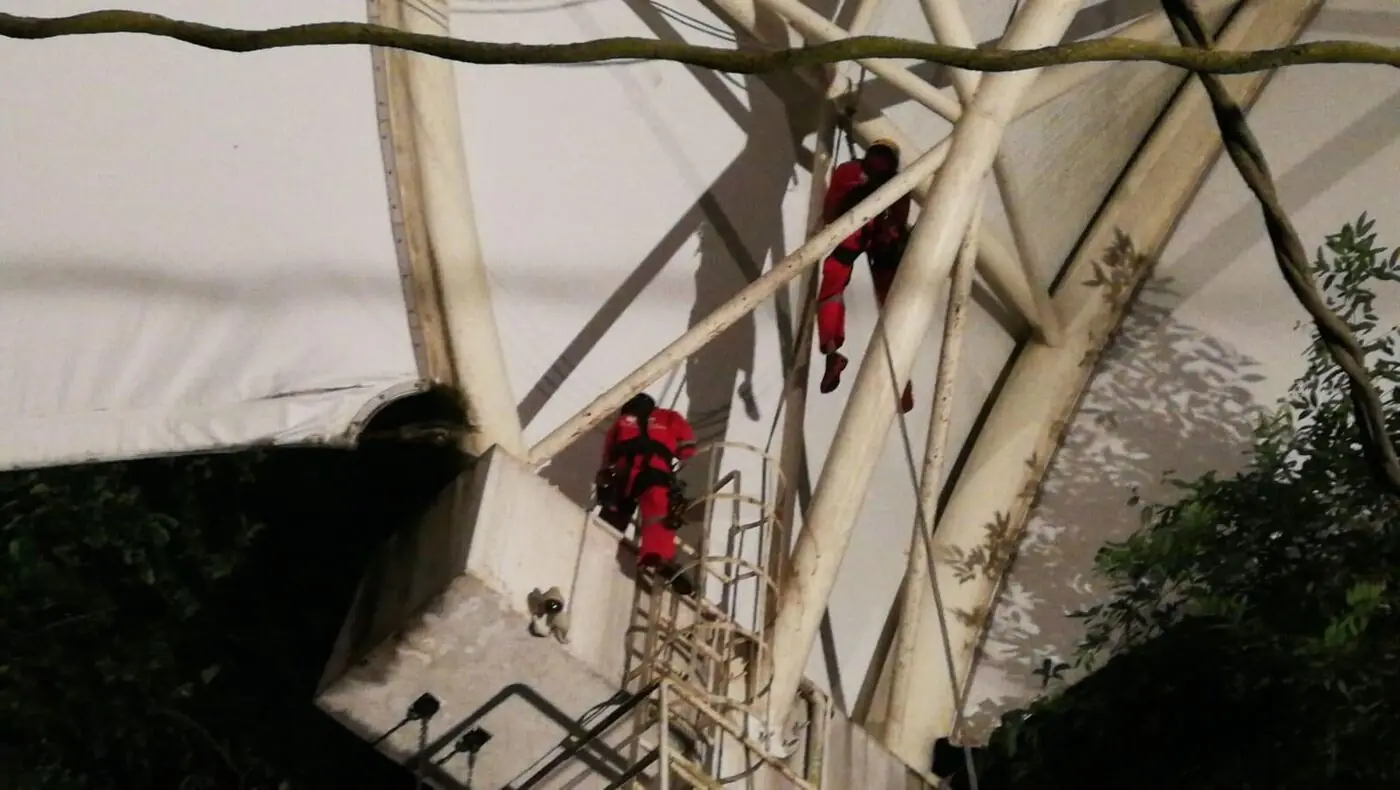
Rope Access Support
Rope access is one method of work at height. We use it when scaffolding or boomlift access is impractical because of building geometry, cost, or surrounding activity. Each job is planned around documented anchor points, twin-rope systems, and a written rescue plan before the team mobilises. Rope access typically delivers faster set-up, a smaller ground footprint and shorter campaigns than scaffolding for slim or busy façades.
Need a dedicated rope-access contractor?
This page explains rope access within a wider work-at-height plan. For a specialist rope-access scope, project examples and direct rope-team enquiries, use the dedicated Rope Access Singapore site.
Visit Rope Access SingaporeScope of work
- Façade inspection, photo survey and condition reporting
- High-rise window and glass cleaning — streak-free finish on cladding, glass and painted surfaces
- Sealant joint cut-out, prime and re-seal works; minor crack repair support
- Painting, spray painting and protective coating touch-up for façade and structural elements
- Window and curtain wall replacement support and lifting / tether assistance
- Signage, banner, LED and backlit sign installation and removal
- High-level electrical, lighting and small antenna access support
- Anchor point inspection and load test coordination
- Rope access for waterproofing and sealant works on tight elevations
Process
Site assessment
Walk-through with the building owner or main contractor to confirm scope, anchorage availability, exclusion-zone footprint, public access concerns, and weather constraints.
Risk assessment & method statement
A written risk assessment and method statement is prepared, covering anchor selection, rope set-up, fall arrest, tool tethering, exclusion zones and a primary plus secondary rescue plan.
Permit-to-work & toolbox
Where required by the venue, we work under a permit-to-work issued by the building. A toolbox briefing is held before each shift and signed off by every technician on site.
Execution
Twin-rope systems, certified harnesses and energy absorbers are used throughout. A standby person monitors the team and exclusion zone, with rescue equipment pre-rigged.
Close-out
Photo records, daily reports and a short close-out note are issued for the client’s records. Anchors and PPE are inspected and logged before the next deployment.