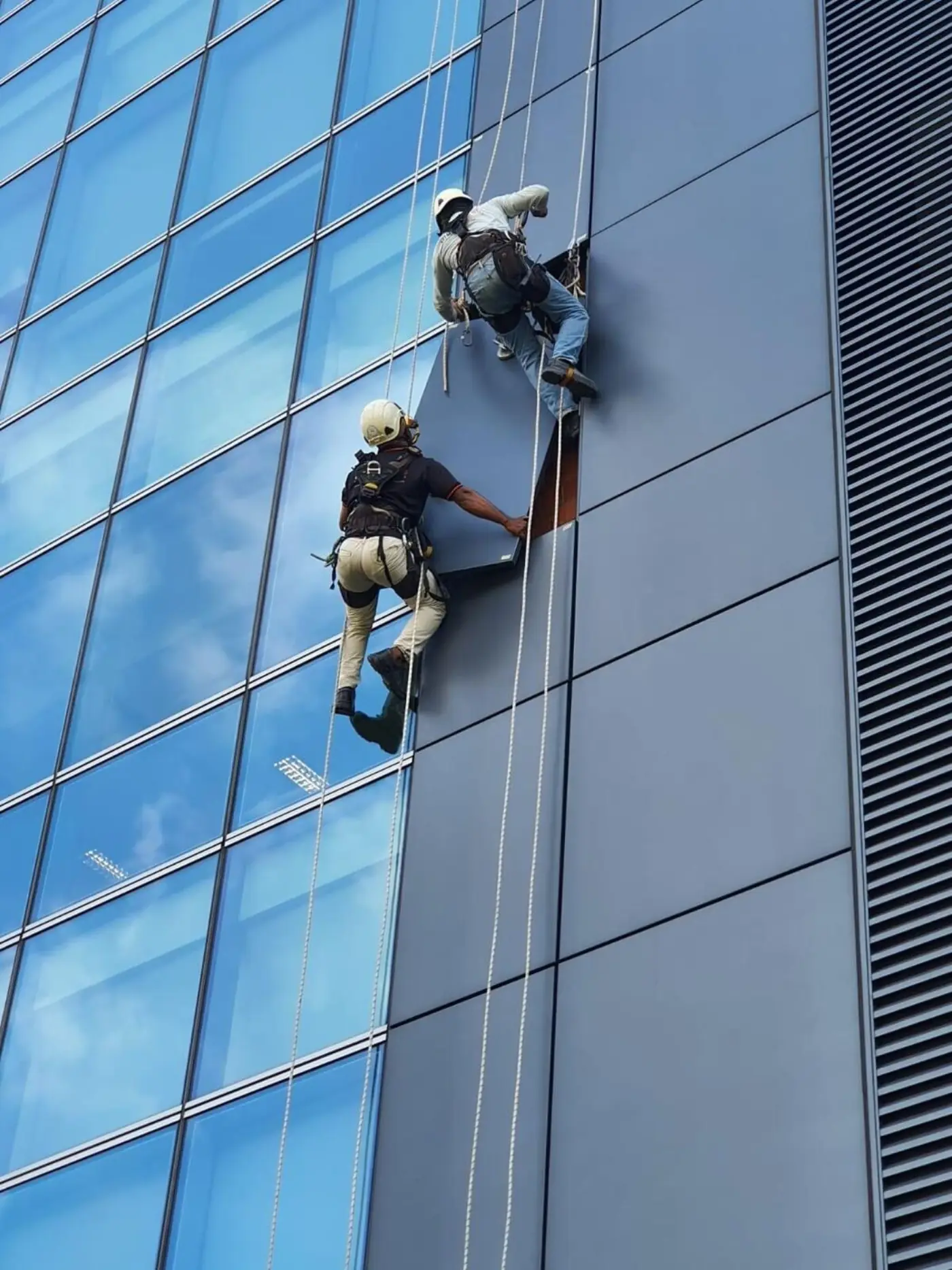
Safety Planning & Method Statements
Most work-at-height incidents trace back to planning, not equipment. A clear access method, a written risk assessment, a sensible exclusion zone, and a rehearsed rescue plan reduce the most common failure modes. We help contractors and building owners put these in place before a technician leaves the ground. Where the work pulls in adjacent disciplines — fall protection systems, safety netting, confined-space entry or scaffolding access — we coordinate the planning so the documents and the equipment line up.
Scope of work
- Risk assessment drafting and review
- Method statement preparation for rope access or MEWP jobs
- Toolbox briefing material and attendance records
- Permit-to-work coordination with the building
- Exclusion zone marking, cone and barricade planning
- Primary and secondary rescue plan documentation
- Fall protection planning — anchor points, horizontal lifelines, fall arrest and restraint set-ups
- Safety netting layout and temporary edge protection planning for construction and maintenance zones
- Confined-space entry and rescue-standby coordination where height work intersects tanks, ducts or vaults
- Scaffolding access coordination — modular, mobile, tower and aluminium scaffold scope review
Process
Define the work
Scope, location, duration, surrounding activity and time-of-day constraints are captured first. The plan is shaped around the job, not pulled from a template.
Identify hazards
Falling person, falling object, electrical proximity, fragile roof, wind, rain, public exposure and confined space are screened against the actual site.
Control measures
Access method, anchor or lift choice, PPE, tool tethering, exclusion zone, and stop-work conditions are written into a method statement reviewed before the job.
Rescue plan
A primary rescue method is documented for every rope access deployment, plus a secondary fall-back. Rescue equipment is pre-rigged where the geometry allows.