Walk the diversion as a first-time visitor
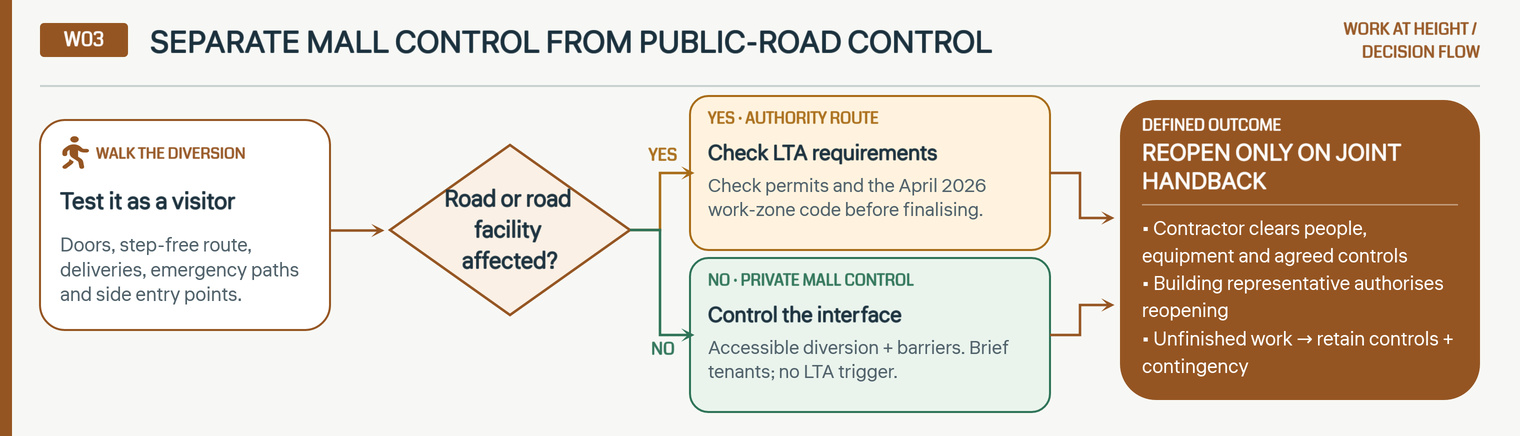
Mark doors, escalators, ramps, lifts, tenant access, deliveries, emergency routes and the boundary between private mall property and public approach. Agree which entrances remain open and where people need step-free access. Place decision-point signage early enough to prevent visitors entering the closed approach, and brief security and tenants on the same route.
The 2025 Code on Accessibility in the Built Environment is BCA’s current edition. Its enhanced requirements apply to new buildings and to existing buildings undergoing addition and alteration works where the plans are submitted to BCA for approval on or after 1 November 2025. [5] Do not imply that every temporary maintenance diversion automatically triggers a building upgrade; the building team should nevertheless plan a safe, accessible temporary route for the actual users. [1]
Control the work area and every interface below
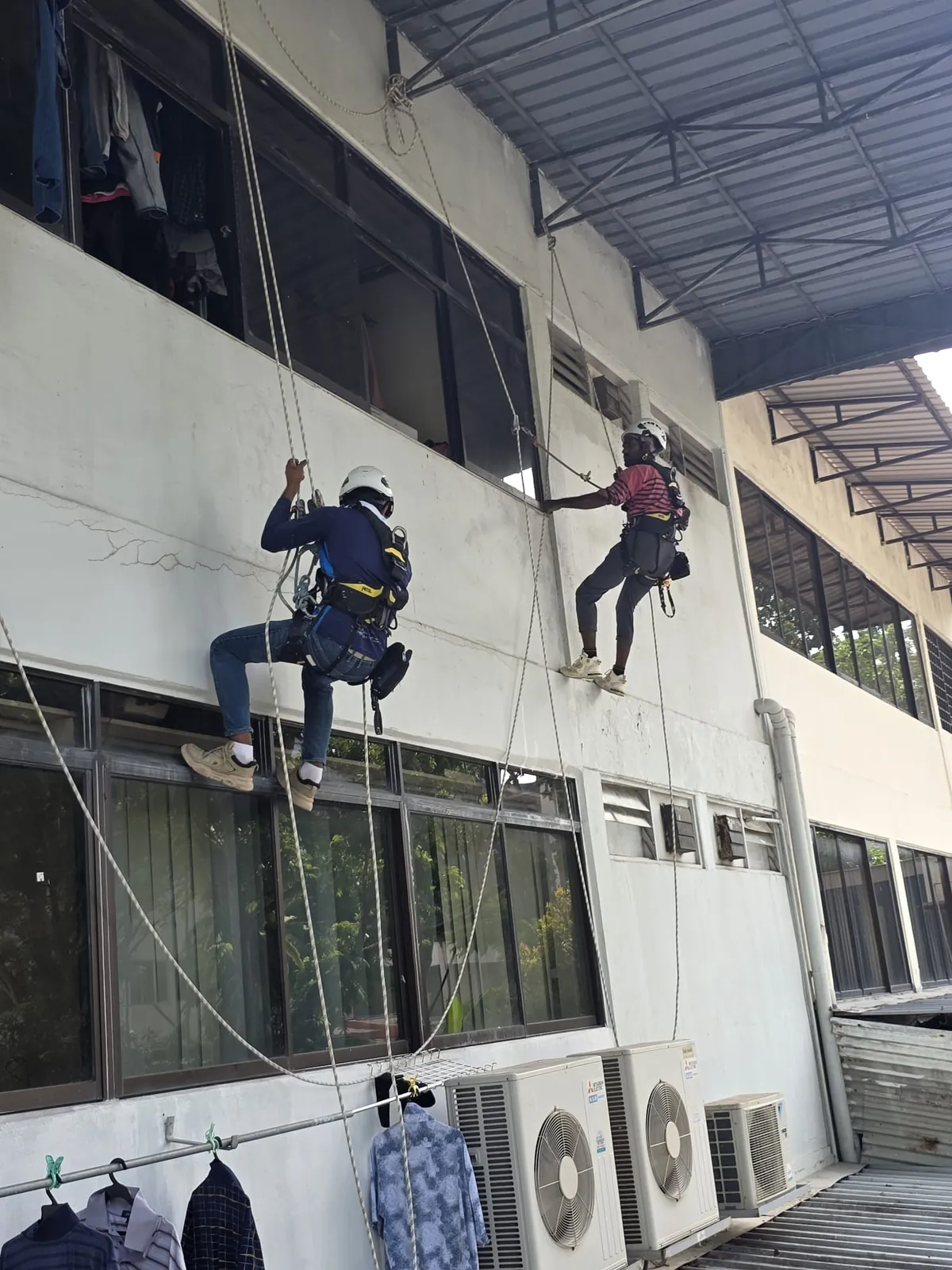
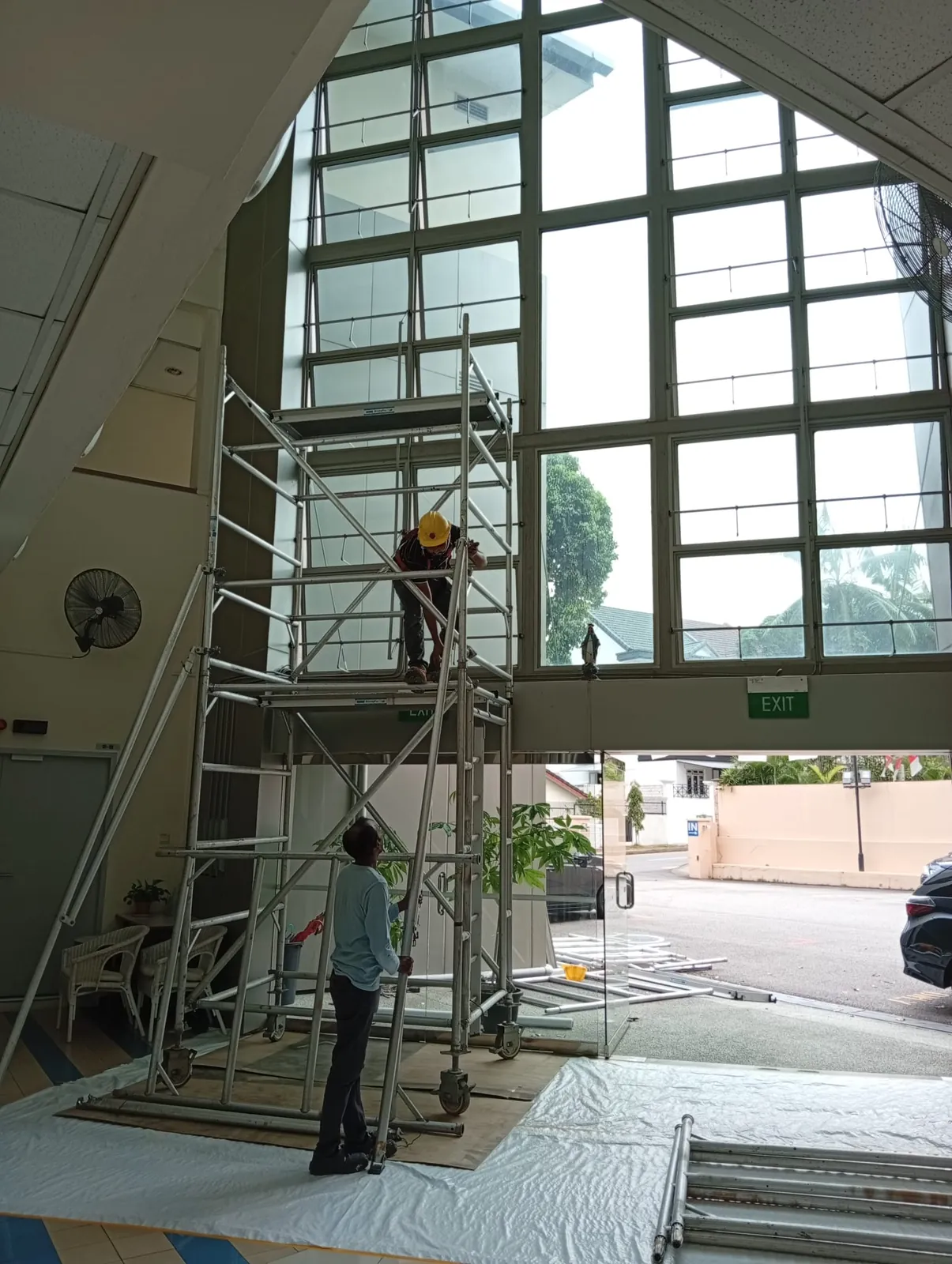
The contractor’s assessment should cover tools, materials, dropped-object exposure, setup movements and people who may enter from side routes. Confirm who controls each barrier, door and crossing and who monitors changes during the shift. Include communication, supervision, rescue and safe suspension if the agreed route fails.
Use the risk assessment to select reasonably practicable controls and review them when work practices or procedures change significantly, or after anyone is injured. Keep the released public route outside the controlled work zone rather than relying on verbal warnings alone. [2] [3]
Do not import public-street rules indiscriminately
Private mall arrangements and work affecting public streets are different checks. LTA’s April 2026 Code of Practice for Traffic Control at Work Zone came into effect on 30 April 2026 and supersedes previous editions. It applies to work on public roads and road-related facilities. If the arrangement affects a public street or footpath, identify the authority, permits and traffic-control requirements before finalising it; do not apply that code indiscriminately inside private mall property. [4]
At handback, one contractor representative confirms that people, equipment, materials and temporary controls are cleared as agreed; one building representative authorises reopening. If work is unfinished, retain the necessary controls and activate the contingency timetable rather than reopening against the clock.
Related: see our facade and high-level works.
Read next: Daytime or Overnight? How to Schedule High-Level Maintenance.
Read next: Safe Work Plan Work at Height Singapore.
Practical checklist
- Show accessible and emergency routes on the same plan as the exclusion zone.
- Place diversion information at the visitor’s decision point.
- Identify the private-property/public-street boundary before selecting requirements.
- Reopen only after the actual site condition and controls have been checked.
References
- Building and Construction Authority. (2025). Code on Accessibility in the Built Environment 2025.
- Workplace Safety and Health (Risk Management) Regulations (Singapore), regs. 3–5 and 7. Singapore Statutes Online.
- Workplace Safety and Health (Work at Heights) Regulations 2013 (Singapore), regs. 4–7. Singapore Statutes Online.
- Land Transport Authority. (2026, April). Code of practice for traffic control at work zone.
- Building and Construction Authority. (2025, April 7). Revised code to enhance Singapore’s built environment for an inclusive nation [Media release].