On Singapore WAH sites, the documents asked for by a main contractor, MCST or facility manager before mobilisation typically include a risk assessment, a method statement or safe work procedure, a fall prevention plan and — for hazardous work at height — a permit-to-work. A Safe Work Plan is the single planning document that pulls these together so that everyone on site, from the project manager to the rope-access technician, can see what the job is and how it will be done safely.
This article is written for contractors planning a job — facade painting, sealant repair, signage installation, lighting works, glass replacement, roof maintenance — and for building owners or MCSTs who need to evaluate what a contractor has submitted. It is general guidance. Project requirements and final compliance should be checked against the actual site conditions and confirmed with a qualified WSH professional where required.
What a Safe Work Plan is
A Safe Work Plan (sometimes called a Safe Work Procedure, Method Statement or Job Safety Plan, depending on the project and the requesting party) is the documented description of how a specific high-level task will be carried out safely. It typically covers:
- Scope and objectives — what work is being done, where, and for whom.
- Coordination with the Person-in-Charge (PIC), main contractor or MCST.
- Personnel — supervisor, competent rope-access or MEWP operators, ground watchman, buddy pairings.
- Equipment — ropes, harnesses, lanyards, descenders, ascenders, helmets, anchors, MEWPs, scaffolds and tools.
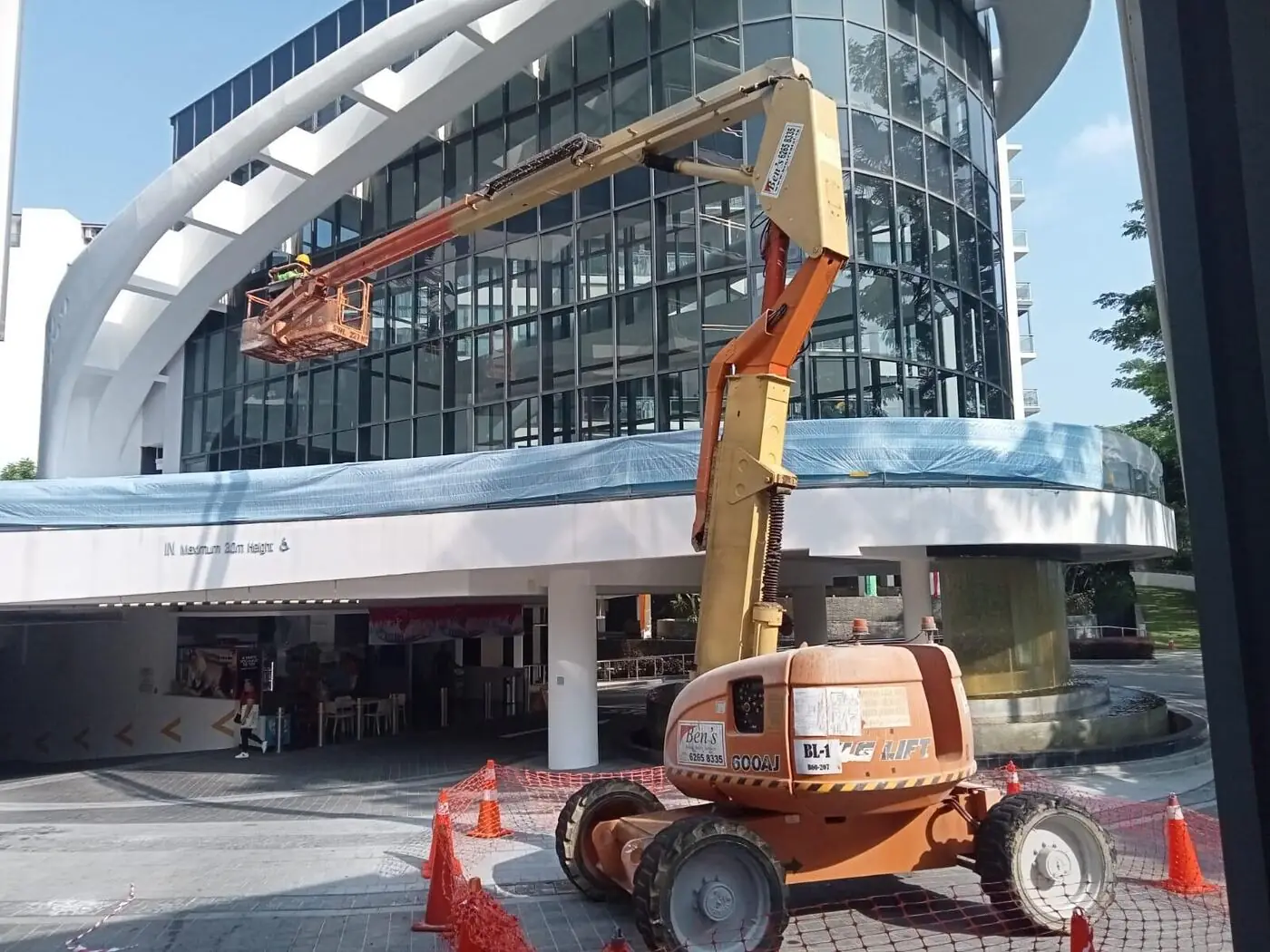
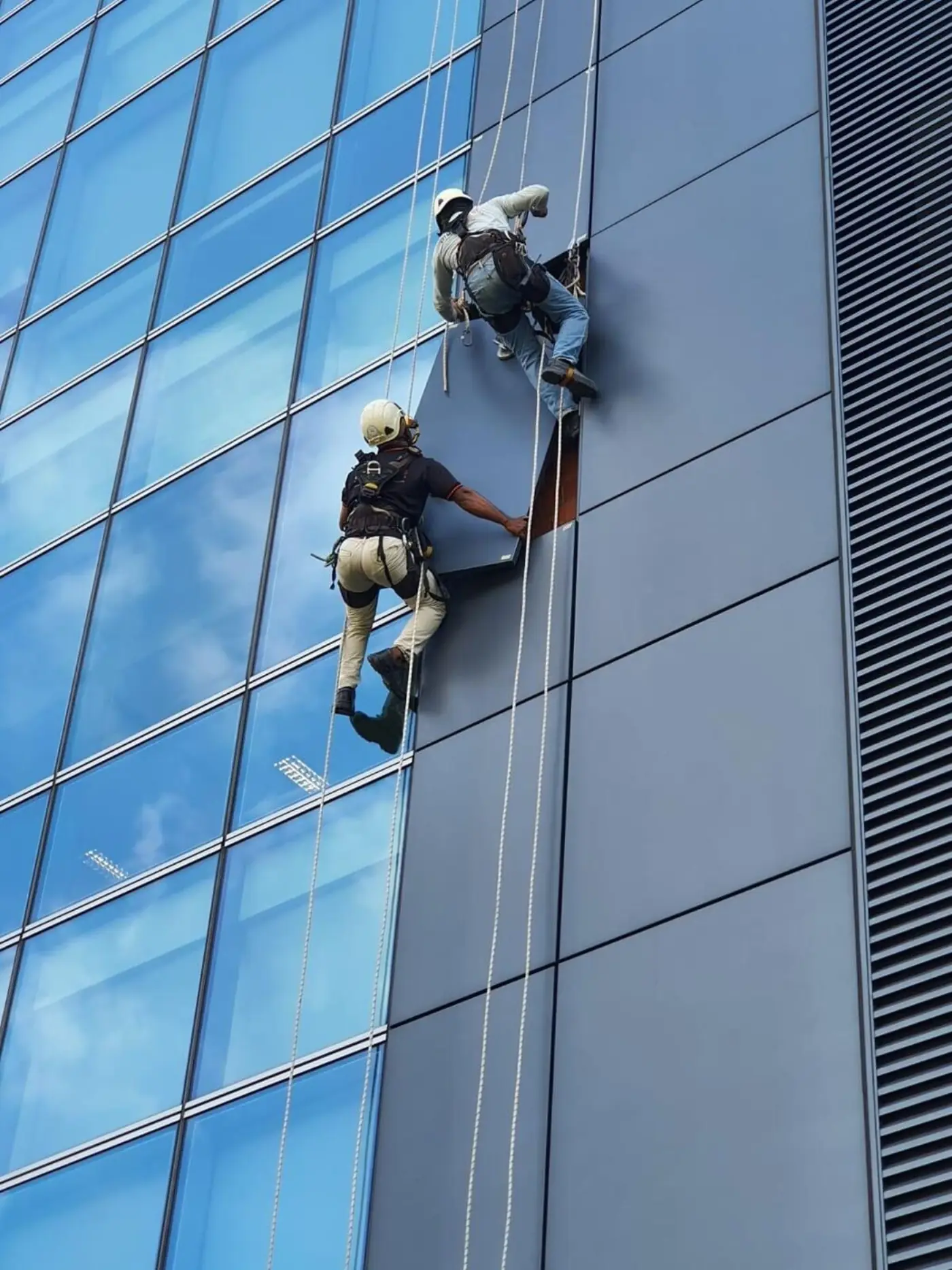
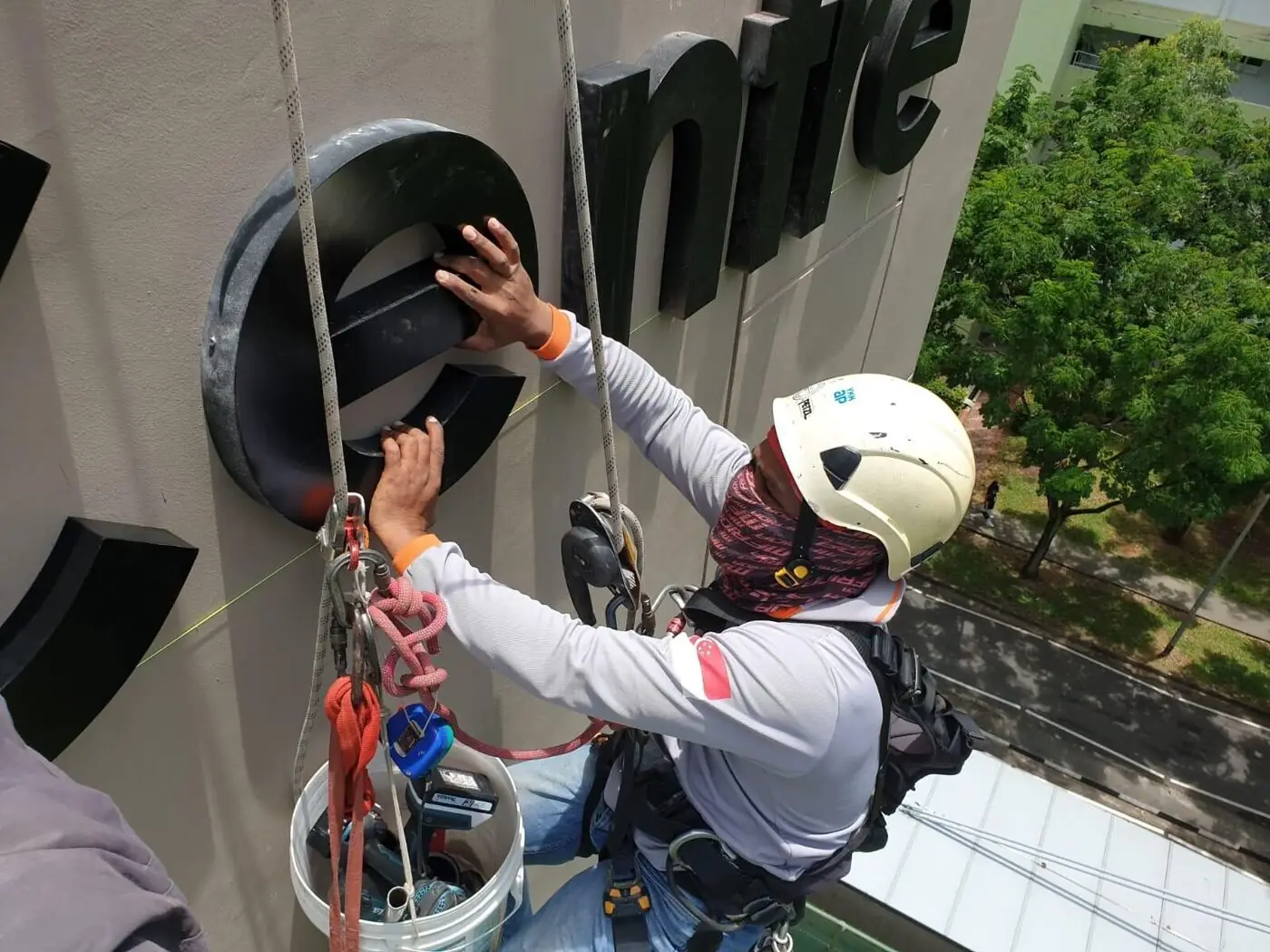
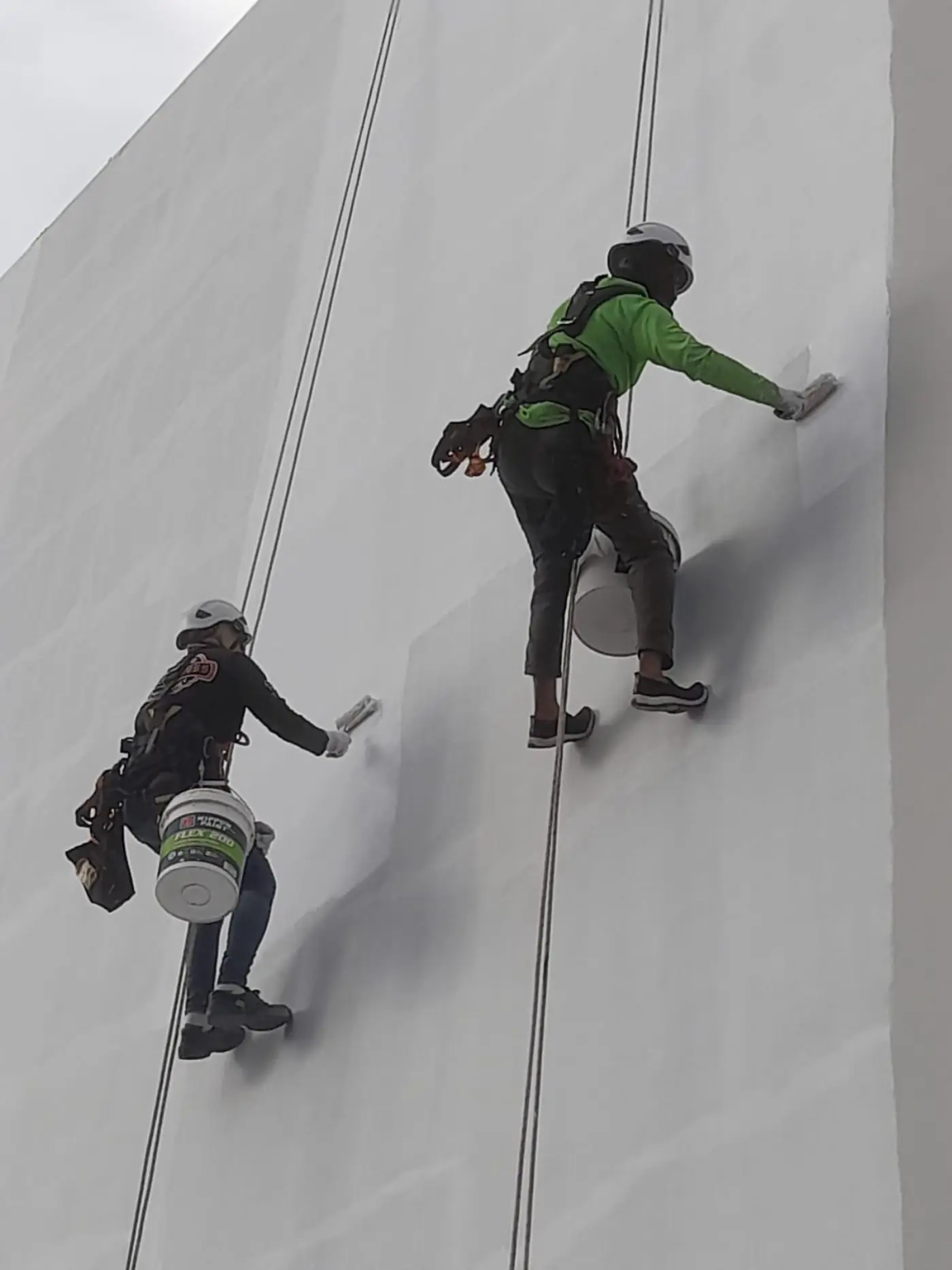
- Access method — rope access, MEWP/boomlift, scaffold, gondola or roof access.
- Hazard identification, risk assessment and control measures.
- Safe work zone — barricades, drop zone, exclusion zone and ground watchman duties.
- PPE and harness requirements.
- Sequence of work and toolbox briefings.
- Permit-to-Work conditions and Fall Prevention Plan reference.
- Emergency response and rescue plan.
- Reference documents and applicable legislation.
The plan is not generic. It is written for the specific building, the specific scope and the specific access method. A reused template is rarely a Safe Work Plan in any meaningful sense.
Why a Safe Work Plan and method statement matters
Most work-at-height incidents in Singapore are traceable to planning gaps rather than equipment failure. The Code of Practice for Working Safely at Heights and the WSH (Work at Heights) Regulations 2013 both place strong emphasis on planning, supervision, competency and documented procedures. The Fall Prevention Plan required for hazardous work at height under the regulations is itself a planning document; the SWP is the operational layer that sits below it.
A documented Safe Work Plan helps in three practical ways:
- It forces the contractor to think through the job before workers arrive on site — anchor points, access route, exclusion zone, weather contingency, rescue.
- It gives the supervisor and workers a shared reference for the daily toolbox briefing and for stop-work decisions.
- It gives the client, MCST or main contractor evidence that controls are in place before access is granted or a PTW is issued.
Risk assessment and control measures
Risk assessment is a regulatory requirement under the WSH (Risk Management) Regulations and is described in detail in the WSH Council's Code of Practice on WSH Risk Management. For work at height it commonly identifies hazards such as falls from height, falling objects, equipment failure, struck-by hazards from adjacent works, fragile or degraded surfaces, weather and rescue failure.
Controls should be applied in the hierarchy of control:
- Elimination — can the work be done without work at height (for example, ground-level inspection by camera or drone)?
- Substitution — can a safer access method (scaffold with a working platform instead of single-point rope work) be used?
- Engineering controls — guardrails, edge protection, safety nets, collective fall protection.
- Administrative controls — PTW, SWP, supervision, toolbox briefings, exclusion zones, signage.
- Personal protective equipment — full-body harness, lanyards, helmets, eye protection, gloves.
A Safe Work Plan should record the hazards, the assessed risk rating and the chosen control measures for the specific task. RA records should be kept and made available for inspection — under the WSH (Risk Management) Regulations the retention period is at least three years from the approval date.
Permit-to-Work and Fall Prevention Plan considerations
Under the WSH (Work at Heights) Regulations, a Permit-to-Work (PTW) system is required for hazardous work at height in workplaces to which the regulations apply, and a Fall Prevention Plan (FPP) is required for sites where work at height is being carried out. MOM's Permit-to-Work guidance describes the application, evaluation and approval stages of a PTW.
In planning, a contractor should:
- Confirm with the main contractor or building owner whether a PTW is required and who issues it on site.
- Identify the WAH Safety Assessor and Authorised Manager named on the PTW, and ensure the supervisor will apply for the PTW on each day or shift it is required.
- Cross-reference the SWP and RA in the PTW so that the controls described actually match the conditions on site.
- Use the FPP as the parent document — the SWP for the day's task should sit consistently inside it, not contradict it.
Even where a formal PTW is not mandated by the regulations, many MCSTs and facility managers operate a site PTW as a contractual condition. The SWP should be written so that it satisfies that local system as well.
Access method planning
Access method selection is one of the most consequential decisions in the plan. The choice depends on building height and geometry, ground conditions, scope, programme and what the building already has installed.
| Access method | Typical planning considerations |
|---|---|
| Rope access | Anchor selection and assessment, twin-rope rigging, technician certification (industrial rope access), buddy system, rescue plan, ground watchman, exclusion zone below. |
| Boomlift / MEWP | Operator training for the specific machine type, ground bearing capacity, overhead clearance, outrigger pads, wind limits, harness anchor inside the platform. |
| Scaffold | PE design where required by the WSH (Scaffolds) Regulations, accredited scaffold contractor, competent scaffold supervisor, inspection before first use and after alteration, guardrails and toe boards. |
| Suspended scaffold (gondola) | PE-designed outriggers, AE examination of the system, SWL clearly marked, trained operators, wire rope and hoist checks, weather limits. |
| Roof access | Cat ladder / hatch inspection, fragile roof identification, edge protection, anchorage assessment, lifeline rigging. |
Whichever method is selected, the SWP should describe: how workers reach the work position safely (safe access and egress), how lifelines and anchors are rigged, what visual checks are required before each use, and what the sequence of work is.
Site control: barricades, drop zone, ground watchman, housekeeping
The area below and around the work zone is part of the safety system. Site control measures that are typically included in a Safe Work Plan:
- Barricades and warning signage establishing a clear exclusion zone below the work area.
- A defined drop zone with no pedestrian or vehicle access during works.
- A ground watchman or banksman to maintain the exclusion zone and to be the first point of contact for emergency rescue from ground.
- Tool tethering and material containment to prevent falling objects.
- Housekeeping on the access platform or rope station — loose items, packaging and offcuts removed during and after the shift.
- Night works planning where permission has been granted — adequate lighting, supervision and visibility for the access method in use.
For works on or adjacent to public footpaths or carparks, coordination with the building management for cordoning and pedestrian diversion is typically required.
Worker competency, PPE and equipment inspection
A Safe Work Plan should set out:
- Competency requirements — WSQ Work-at-Heights training, MEWP operator certification, industrial rope-access certification appropriate to the work level, scaffold supervisor competency, where applicable.
- PPE list — full-body harness, energy-absorbing lanyards, helmets with chin strap, eye protection, gloves, anti-slip footwear, hearing protection where required.
- Equipment register — ropes, descenders, ascenders, anchors, lanyards, hardware, with serial numbers and last-inspection dates.
- Pre-use inspection routine — each shift, by the operator or technician, before going up.
- Examination records — for MEWPs and gondolas, current statutory examination by an Authorised Examiner under the WSH (General Provisions) or WSH (Scaffolds) Regulations as applicable.
- Buddy system — pairing technicians so each is observed by another worker trained in rescue, particularly for rope-access works.
Industrial rope-access equipment and PPE are addressed specifically in Part IV of the WSH (Work at Heights) Regulations 2013, including design and inspection obligations.
Emergency and rescue planning
Rescue is not optional. Every Safe Work Plan should include a documented rescue procedure for the access method in use, naming:
- The rescue technique — for rope access this is typically a pick-off rescue by a second technician on a separate rope set; for MEWPs this is typically auxiliary lowering using the ground-level emergency descent control; for gondolas it is the emergency lowering system on the hoist.
- The rescue team — who on site is trained and equipped to perform the rescue without leaving the workplace to fetch equipment.
- The escalation route — when emergency services are called, who calls them, and who meets and directs them on arrival.
- First aid arrangements — first aider on site, location of the first aid kit, and any specific provisions for suspension trauma after a fall arrest.
- Stop-work triggers — weather, equipment defect, worker condition, adjacent activity — and the procedure for getting all workers safely to ground level.
A rescue plan that has never been rehearsed is a paper plan. Where the access method permits, a rescue drill should be conducted before sustained operations and at intervals during the project.
Documents a client, MCST or main contractor may request
Before access is granted on a Singapore building site, a contractor should expect to provide some or all of the following. The exact list varies by site and should be checked against project requirements:
- Risk Assessment specific to the building, access method and task.
- Safe Work Procedure / Method Statement covering the planned sequence.
- Fall Prevention Plan for the site.
- Permit-to-Work application and approval records (per shift, where applicable).
- Workers' WSQ Work-at-Heights training certificates.
- Industrial rope-access certification or MEWP operator certificates as relevant to the method.
- Equipment register and the most recent inspection / examination records.
- Insurance certificates (work injury compensation, public liability).
- Emergency contact list and rescue plan.
- Toolbox briefing attendance records (commonly maintained on site once works start).
Producing this documentation is a baseline of professional practice. A contractor who treats it as an administrative inconvenience is signalling something about the rest of their operation.
Reference documents and relevant legislation
A Safe Work Plan for high-level works in Singapore is commonly written with reference to:
- Workplace Safety and Health Act and its subsidiary legislation.
- WSH (Work at Heights) Regulations 2013 — general provisions, PTW for hazardous WAH, and industrial rope-access equipment requirements.
- WSH (Risk Management) Regulations and the approved Code of Practice on WSH Risk Management.
- WSH (Scaffolds) Regulations — for scaffold and suspended-scaffold (gondola) works.
- WSH (General Provisions) Regulations — for lifting equipment including MEWPs.
- WSH Council Code of Practice for Working Safely at Heights (2013).
- Manufacturer's manuals and Singapore Standards applicable to the specific equipment in use.
Final checklist for contractor planning
Before the first worker goes up, a contractor planning a Singapore work-at-height job should be able to answer yes to each of these:
- Scope is defined, agreed with the PIC / main contractor / MCST, and matches what the SWP describes.
- Risk Assessment is specific to the site and signed off.
- Fall Prevention Plan is in place and the SWP sits consistently within it.
- Permit-to-Work has been applied for and approved where required.
- Access method is selected and the supporting documentation (PE design, AE examination, anchor assessment) is current.
- Competent personnel are assigned — supervisor, trained operators/technicians, ground watchman, buddy partners.
- PPE and equipment are inspected, in date, and matched to the task.
- Exclusion zone, barricades and drop-zone control are arranged before work begins.
- Toolbox briefing for the day has been delivered and attendance recorded.
- Rescue plan is documented, the rescue team is on site, and stop-work triggers are understood.
- Weather has been checked and the work is within equipment and procedure limits.
- Reference documents and legislation are listed in the SWP and accessible on site.
Where any of these is not yet in place, the SWP is not ready and work should not begin. Consult the site owner, main contractor or a qualified safety professional where the answer is unclear.
Frequently asked questions
Is a Safe Work Plan the same as a Method Statement?
The terms are used interchangeably at many Singapore sites. Some main contractors require a separate Method Statement for sequence of work and a Safe Work Plan for safety controls.
Who is responsible for preparing the Safe Work Plan?
The employer or principal contractor responsible for the WAH activity must ensure a safe system of work is in place. In practice, the WAH contractor prepares the SWP and the site supervising party reviews it.
How long should WAH safety documents be retained?
Risk assessments and related records should be kept for at least three years. PTW records and approved SWPs should also be retained by building owners and facility managers for audit and incident investigation.
Does a Safe Work Plan need to be rewritten for every job?
A generic template cannot substitute for a site-specific SWP. The plan must reflect the actual building, access method, personnel and hazards for each project.
What is the difference between a Fall Prevention Plan and a Safe Work Plan?
The FPP is a higher-level site or project document covering fall prevention arrangements. The SWP is task-specific and should be consistent with and reference the FPP.
References
- WSH Act (Cap. 354A)
- WSH (Work at Heights) Regulations 2013
- WSH (Risk Management) Regulations
- WSH Code of Practice on Working Safely at Heights (2nd Revision 2013)
- WSH Council - Work at Height resources
- MOM - Factsheet on WAH Amendment Regulations
- MOM - Permit-to-Work systems
- MOM - WSH legislation and approved Codes of Practice