Abstract
The Industrial Rope Access System ("IRAS") is the only category of work-at-height equipment to be regulated by a dedicated Part of the Workplace Safety and Health (Work at Heights) Regulations 2013. This paper examines the statutory definition of an IRAS inserted by S 280/2014, the equipment and personal protective equipment requirements imposed by Regulation 29, the professional engineering and competent-person inspection obligations established by Regulation 30, the operational standards prescribed by Section 10.2 of the Workplace Safety and Health Council's Approved Code of Practice for Working Safely at Heights, and the most recent regulatory guidance issued by the Tripartite Alliance for Workplace Safety and Health through mid-2026. The paper is intended for façade inspection, building maintenance, and rope access contractors operating under the Workplace Safety and Health Act.
1. Statutory Standing of the IRAS
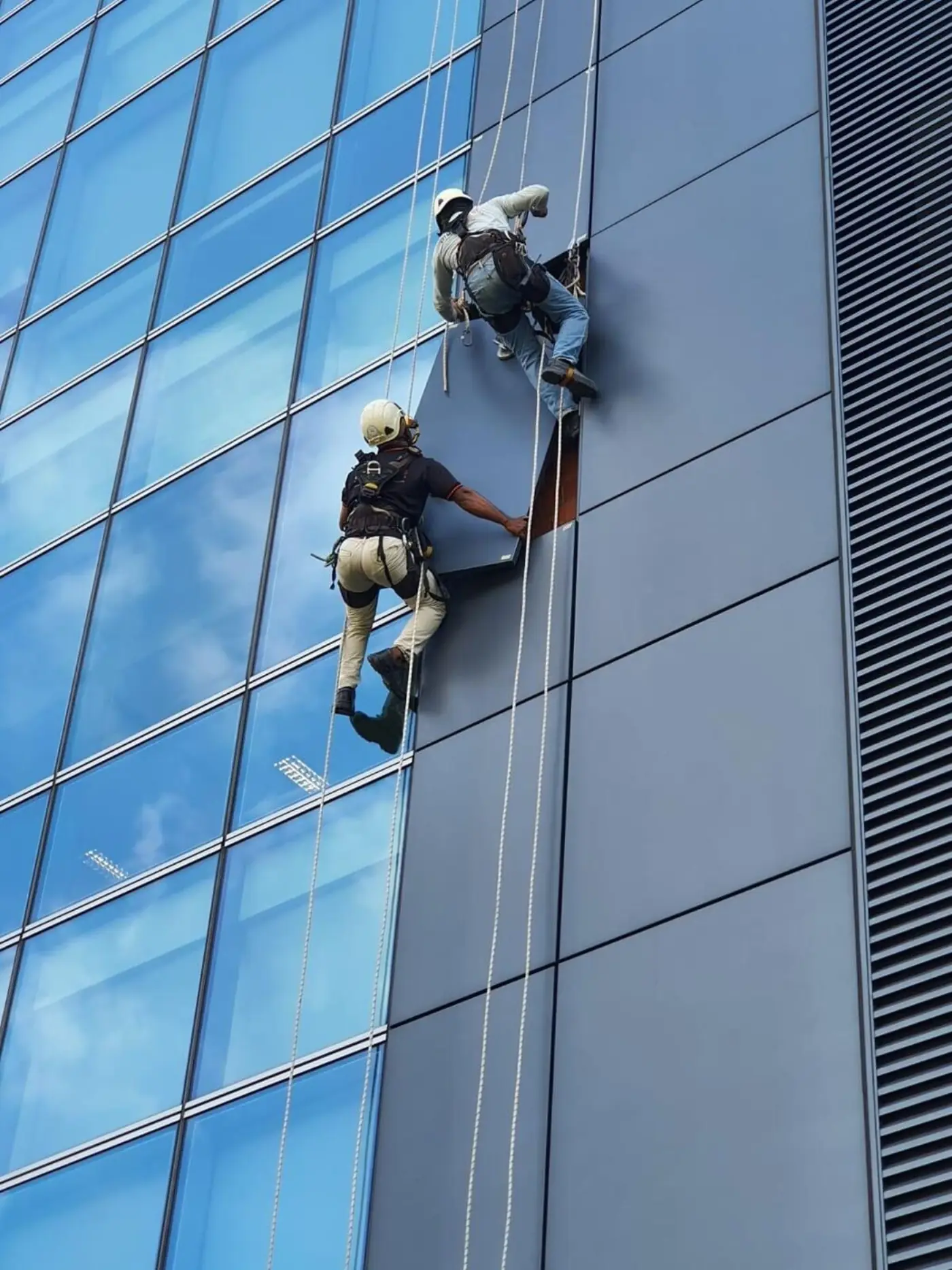
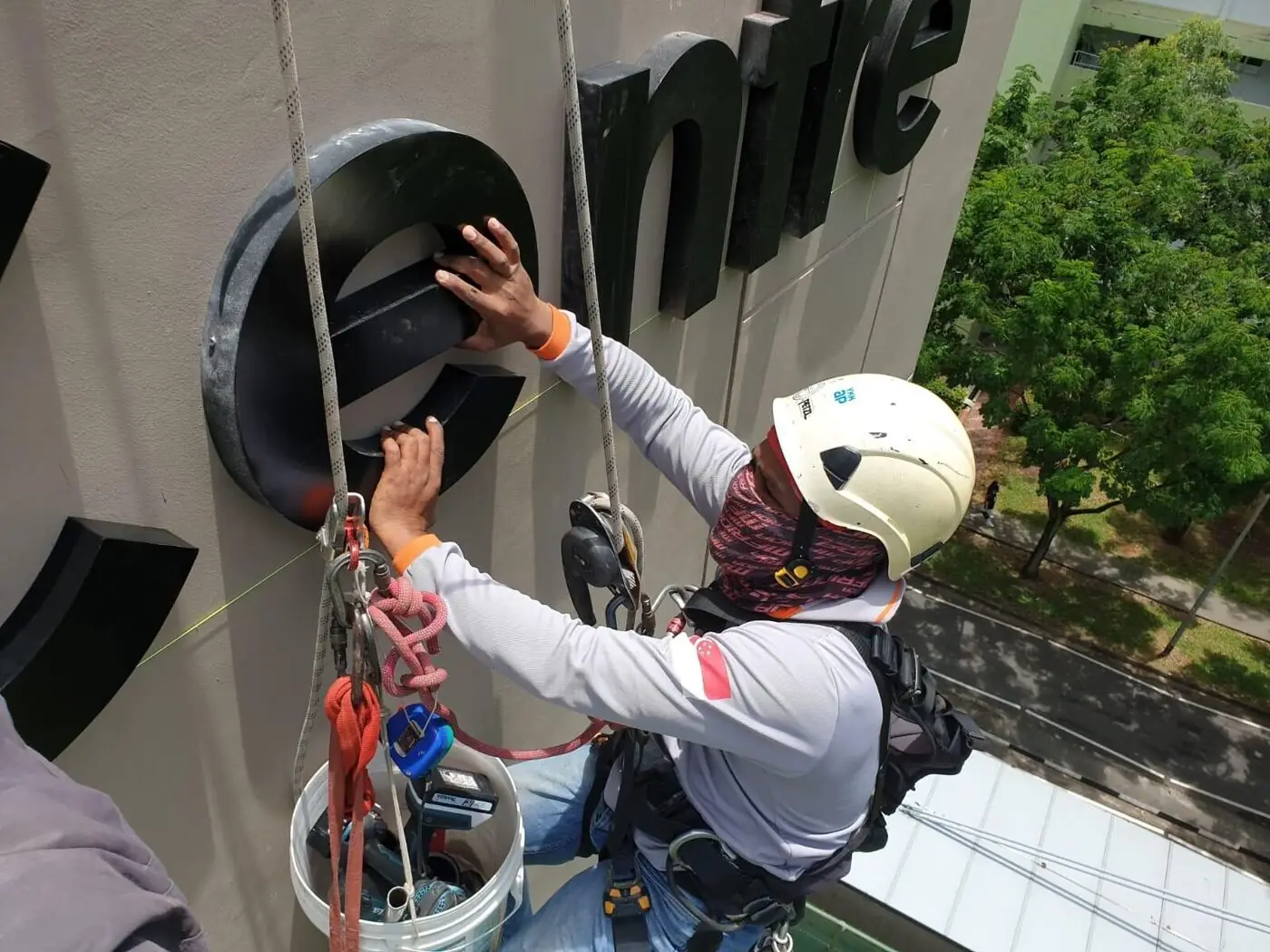
The Industrial Rope Access System occupies a position of distinct regulatory significance within Singapore's work-at-height regime: alone among the disciplines covered by the Workplace Safety and Health (Work at Heights) Regulations 2013 ("the WAH Regulations"), it is the subject of an entire dedicated Part. Part IV — comprising Regulations 29 and 30 — imposes equipment, design, anchorage, inspection, and competency requirements that, taken together, render the IRAS a multi-party documented system as a matter of subsidiary legislation, not merely of industry practice.
Regulation 2 of the WAH Regulations, as amended by S 280/2014 with effect from 1 May 2014, defines an Industrial Rope Access System as "a system designed for the purpose of performing work on a building, structure or tree by a person" and consisting of (a) "equipment that enables a person to manually raise or lower himself in a harness supported by one or more ropes" and (b) "equipment used to anchor the ropes" (Singapore Statutes Online, *WSH (WAH) Regulations 2013*, as amended by S 280/2014 (https://sso.agc.gov.sg/SL/WSHA2006-S223-2013)). The definition is functional rather than descriptive: any system meeting these two criteria is subject to Part IV, regardless of nomenclature or industry classification.
2. Regulation 29: Equipment and Personal Protective Equipment
Regulation 29 imposes the core technical standard for any IRAS used in a Singapore workplace. The responsible person — defined as the employer or the principal under whose direction the work is undertaken — must ensure that the system:
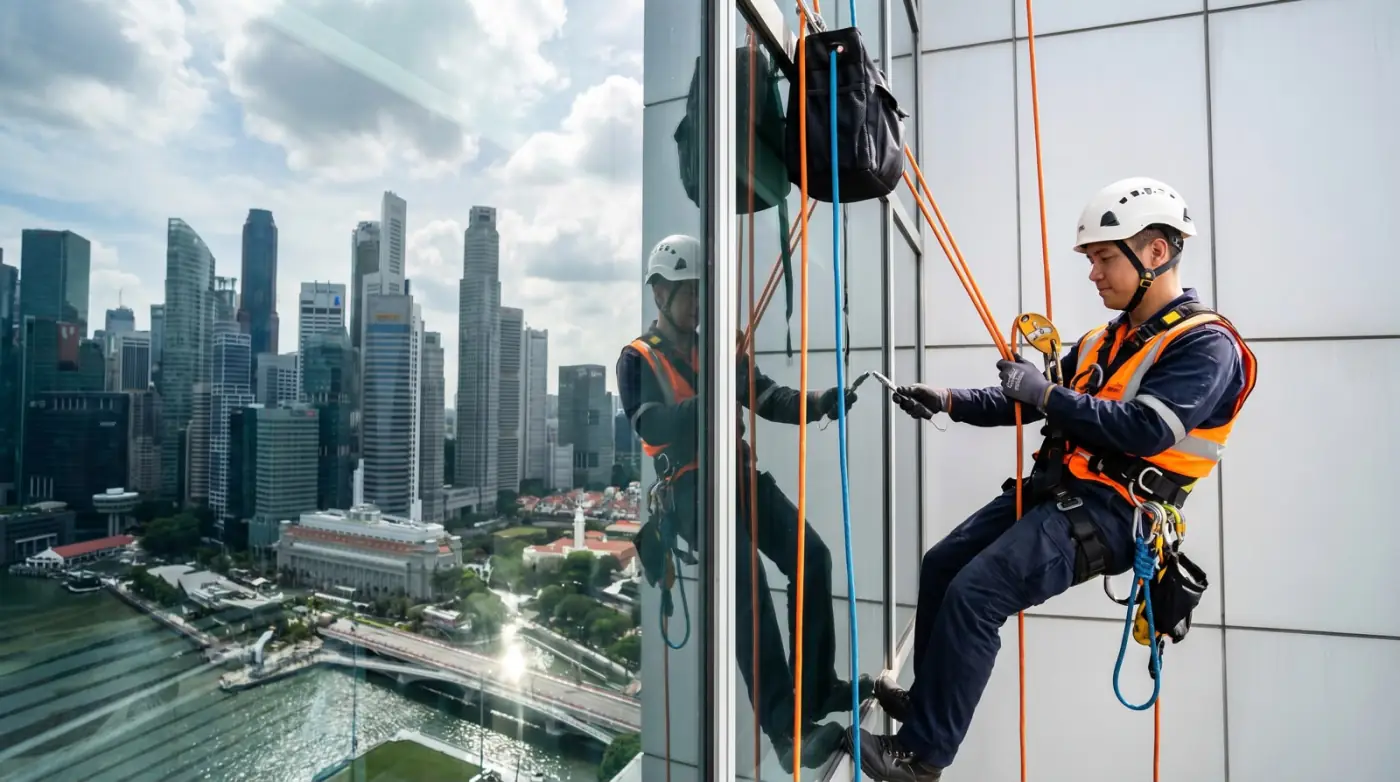
- Comprises at least two independent anchorage lines, one constituting the working line and the other the safety line;
- Provides the user with a suitable harness connected to both the working line and the safety line;
- Equips the working line with safe means of ascent and descent, together with a self-locking system to prevent a fall in the event that the user loses control of his movements; and
- Ensures that no part of the system comes into contact with anything that could affect the safe use of the system (Singapore Statutes Online, *WSH (WAH) Regulations 2013*, Reg. 29(1) (https://sso.agc.gov.sg/SL/WSHA2006-S223-2013)).
Regulation 29(2) imposes a further obligation in respect of every item of equipment forming part of the IRAS: each item shall be of good construction, sound material, and adequate strength; free from patent defects; properly maintained; and marked with a unique identifier permitting traceability to a test inspection, a thorough examination, or a certificate of conformity (Singapore Statutes Online, *WSH (WAH) Regulations 2013*, Reg. 29(2) (https://sso.agc.gov.sg/SL/WSHA2006-S223-2013)).
The two-independent-line requirement is the doctrinal foundation of Part IV. It is the defining standard that distinguishes a regulated industrial rope access operation from informal abseiling or single-line work. The regulation admits no exception for short duration; it admits no exemption for routine inspection; it admits no derogation on grounds of cost or convenience. Compliance with Regulation 29(1)(a) is, in legal terms, an absolute obligation.
3. Regulation 30: Engineered Design and Competent Inspection
Regulation 30 layers a professional engineering and competent-person inspection regime upon the equipment obligation established by Regulation 29 (Singapore Statutes Online, *WSH (WAH) Regulations 2013*, Reg. 30 (https://sso.agc.gov.sg/SL/WSHA2006-S223-2013)):
- Every anchorage and anchorage line of an IRAS shall be installed in accordance with the design and drawings of a Professional Engineer registered under the Professional Engineers Act and holding a current practising certificate;
- The Professional Engineer-certified design and drawings shall be kept available at the workplace;
- The responsible person shall appoint a competent person — defined under Regulation 2 as a person with sufficient experience and training, and who has passed such courses as the Commissioner may require — to inspect the system before each use.
The cumulative effect of Regulations 29 and 30 is that lawful operation of an IRAS in Singapore requires, at a minimum, three distinct participants: a Professional Engineer responsible for the certified design; a competent person responsible for inspection; and a trained operator responsible for the work itself. The absence of any of these participants renders the operation non-compliant as a matter of subsidiary legislation, irrespective of whether an incident occurs.
4. The Approved Code of Practice: Section 10.2
Section 10.2 of the Workplace Safety and Health Council's Approved Code of Practice for Working Safely at Heights translates the Part IV statutory framework into operational practice. Prior to the selection of any personal fall-protective equipment as a control measure, three conditions are to be satisfied (Workplace Safety and Health Council, *Code of Practice for Working Safely at Heights*, 2nd rev. 2013 (https://www.tal.sg/wshc/-/media/tal/wshc/resources/publications/codes-of-practice/files/wsh-code-of-practice-2013_ebook.ashx)):
- The personal protective equipment shall have been assessed as suitable and adequate for the assigned work-at-height task;
- The persons to whom the equipment is issued shall be trained and shall possess the skill and knowledge to use it safely; and
- Suitable and adequate anchor points or lifelines shall be provided to enable one-hundred-per-cent tie-off at all times.
The Code requires that training afford workers and supervisors a substantive understanding of: the risk of injury associated with the task; the control measures required, including safe work procedures and the use of personal protective equipment; the proper use and inspection of equipment; and the emergency procedures to be followed in the event of rescue, accident, or injury. Emergency response, including the rescue of a suspended worker exhibiting symptoms of suspension trauma, is to be planned for in advance — not improvised in the event.
5. Tripartite Alliance and WSH Council Guidance
The Workplace Safety and Health Council's Approved Codes of Practice Notification of 2024 reaffirmed the 2013 Approved Code of Practice for Working Safely at Heights, inclusive of its rope access provisions, as the current Approved Code under section 40A of the Workplace Safety and Health Act (Workplace Safety and Health Council, *ACOP Notification 2024* (https://www.tal.sg/wshc/-/media/tal/wshc/resources/publications/codes-of-practice/files/wsh-acop-notification-2024.ashx)). The WSH Insights bulletin of 31 January 2024 underscored the operational corollary of Regulation 29: the identification of secure anchor points for every worker, and the prohibition on deploying any worker to a site at which suitable anchor points are not in place (Workplace Safety and Health Council, *WSH Insights, 31 January 2024* (https://www.tal.sg/wshc/-/media/tal/wshc/resources/newsletters/wsh-bulletins/files/20240131_wsh_insights.ashx)).
For work at heights at completed buildings — the operational setting most directly relevant to façade inspection and maintenance — the WSH Circular *Safe Work at Heights at Completed Buildings* obligates occupiers to engage competent contractors with trained workers and a documented job-specific risk assessment, and obligates contractors to conduct risk assessments, implement safe work procedures, and provide relevant training and supervision (Workplace Safety and Health Council, *Safe Work at Heights at Completed Buildings* (https://corenet.gov.sg/media/2186920/wsh-circular-safe-work-at-heights-at-completed-buildings.pdf)).
The Council's 2026 publication cycle has continued to develop the prevailing guidance:
- The WSH Advisory of 25 March 2026, *Fall from Height Workplace Fatal Injuries in 2H 2025*, applies directly to suspended access operations (Workplace Safety and Health Council, *About Work at Heights* (https://www.tal.sg/wshc/topics/work-at-height/about-work-at-heights));
- The presentation *Designing Out Fall Hazards: Safe Access in Buildings and Infrastructure* of 5 February 2026 advances the case for permanent, engineered anchorage specified at the design stage of buildings and infrastructure — a position of particular relevance to façade maintenance contracts (Workplace Safety and Health Council, *Work at Height* (https://www.tal.sg/wshc/topics/work-at-height));
- The presentation *2025 Statistical Trends and Regulatory Insights in WAH* of 5 February 2026 confirms the regulator's continuing focus on IRAS competency and inspection records (Workplace Safety and Health Council, *Work at Height* (https://www.tal.sg/wshc/topics/work-at-height));
- The April 2026 release of *Pictograms on Good WSH Practices* and the poster *6 Basic WSH Rules for Safe Use of MEWPs* reflects an increased emphasis on visual, multilingual reinforcement of safety standards across the typically multilingual workforce on Singapore rope access sites (Workplace Safety and Health Council, *About Work at Heights* (https://www.tal.sg/wshc/topics/work-at-height/about-work-at-heights)).
6. Sectoral Relevance: Façade and Building Maintenance
The empirical case for systemic compliance is illustrated by the 2024 fatality profile of the Marine sector. The Ministry of Manpower's annual report records that the Marine sector's fatal and major injury rate rose from 35.3 per 100,000 workers in 2023 to 35.8 in 2024, driven by an increase from zero fatalities in 2023 to five in 2024 — four of which involved work on vessels at anchorage and two of which involved diving operations exhibiting "systemic safety lapses" (Ministry of Manpower, *Singapore's WSH Performance in 2024*, 26 March 2025 (https://www.mom.gov.sg/newsroom/press-releases/2025/0326wshreport)). The finding is generalisable across disciplines in which the safety regime depends upon multi-party engineered systems: the absence of any one element — a Professional Engineer-certified design, a competent person inspection, a trained operator, an independent safety line — operates as a single point of failure.
7. Compliance Audit Framework for IRAS Operations
The following framework is recommended for site-level audit prior to any rope access deployment:
- Does the IRAS comprise at least two independent anchorage lines, one constituting a working line and the other a safety line?
- Is the working line equipped with a self-locking ascent and descent device?
- Are the Professional Engineer-certified design and drawings maintained at the workplace?
- Has a competent person inspected the system prior to this use?
- Does every item of equipment carry a unique identifier permitting traceability to a test inspection, thorough examination, or certificate of conformity?
- Is a documented rescue plan in place, with the requisite equipment and trained personnel available on site to effect a rescue within the suspension-trauma window?
- Does every operator hold the relevant Ministry of Manpower-recognised rope access competency certification?
8. Conclusion
Part IV of the WAH Regulations 2013 establishes an unusually prescriptive regulatory framework for industrial rope access in Singapore, characterised by absolute equipment requirements under Regulation 29 and a multi-party engineering and competency framework under Regulation 30. The Approved Code of Practice for Working Safely at Heights, supplemented by the 2024 ACOP Notification and the 2026 publication cycle of the Workplace Safety and Health Council, gives operational content to those statutory obligations. For contractors operating in façade inspection, building maintenance, and rope access disciplines, full compliance with Part IV — at the level of design, equipment, inspection, competency, and emergency response — is not merely a regulatory expectation but a doctrinally absolute condition of lawful operation.
---
Primary Sources
- Workplace Safety and Health (Work at Heights) Regulations 2013, Part IV — Singapore Statutes Online (https://sso.agc.gov.sg/SL/WSHA2006-S223-2013)
- WSH Council Approved Code of Practice for Working Safely at Heights (2nd rev. 2013) (https://www.tal.sg/wshc/-/media/tal/wshc/resources/publications/codes-of-practice/files/wsh-code-of-practice-2013_ebook.ashx)
- WSH Council *ACOP Notification 2024* (https://www.tal.sg/wshc/-/media/tal/wshc/resources/publications/codes-of-practice/files/wsh-acop-notification-2024.ashx)
- WSH Council *WSH Insights, 31 January 2024* (https://www.tal.sg/wshc/-/media/tal/wshc/resources/newsletters/wsh-bulletins/files/20240131_wsh_insights.ashx)
- WSH Council — *About Work at Heights* (https://www.tal.sg/wshc/topics/work-at-height/about-work-at-heights)
- WSH Council — Work at Height resources, 2026 (https://www.tal.sg/wshc/topics/work-at-height)
- WSH Circular: *Safe Work at Heights at Completed Buildings* (https://corenet.gov.sg/media/2186920/wsh-circular-safe-work-at-heights-at-completed-buildings.pdf)
- MOM *Singapore's WSH Performance in 2024*, 26 March 2025 (https://www.mom.gov.sg/newsroom/press-releases/2025/0326wshreport)