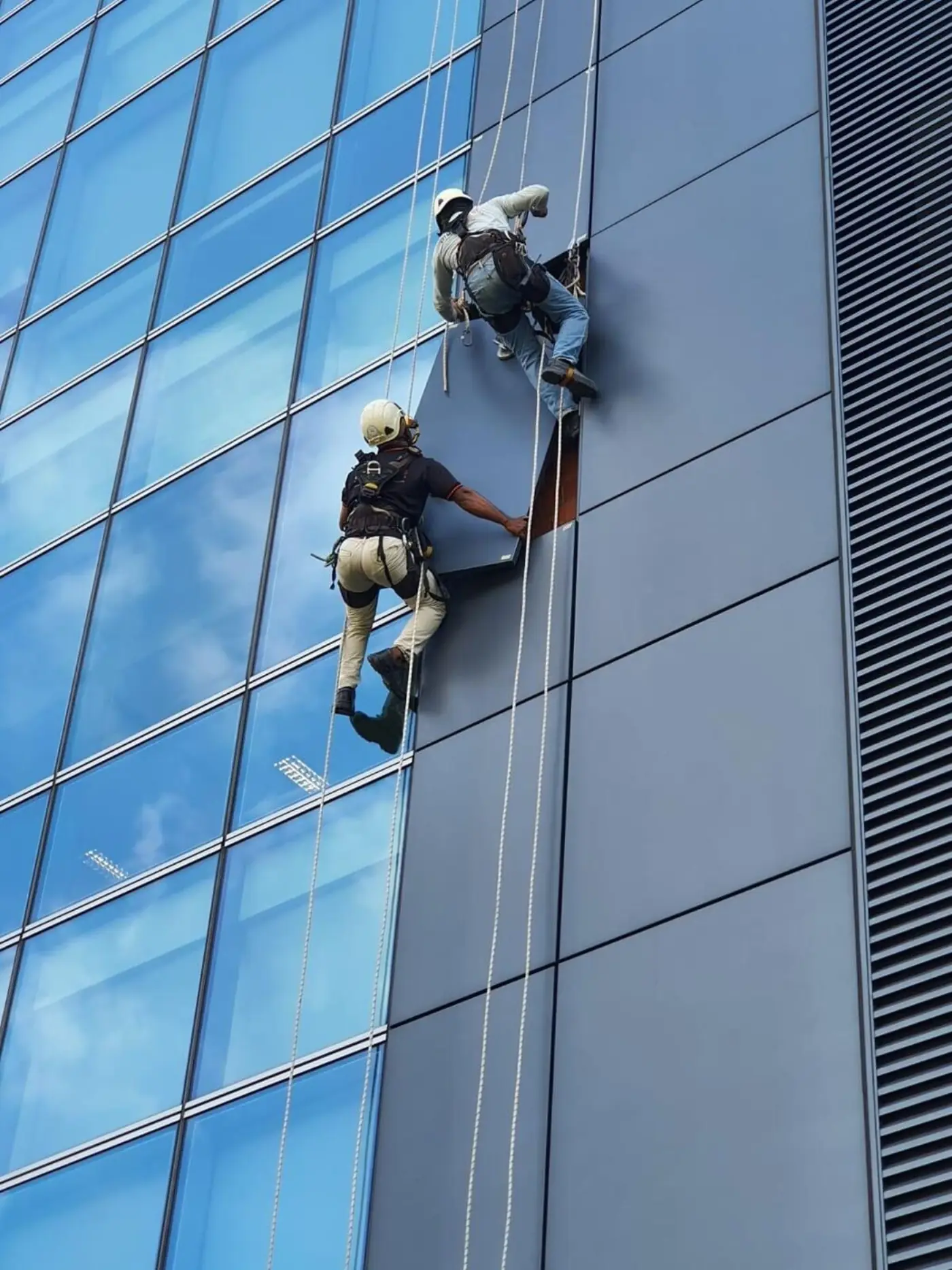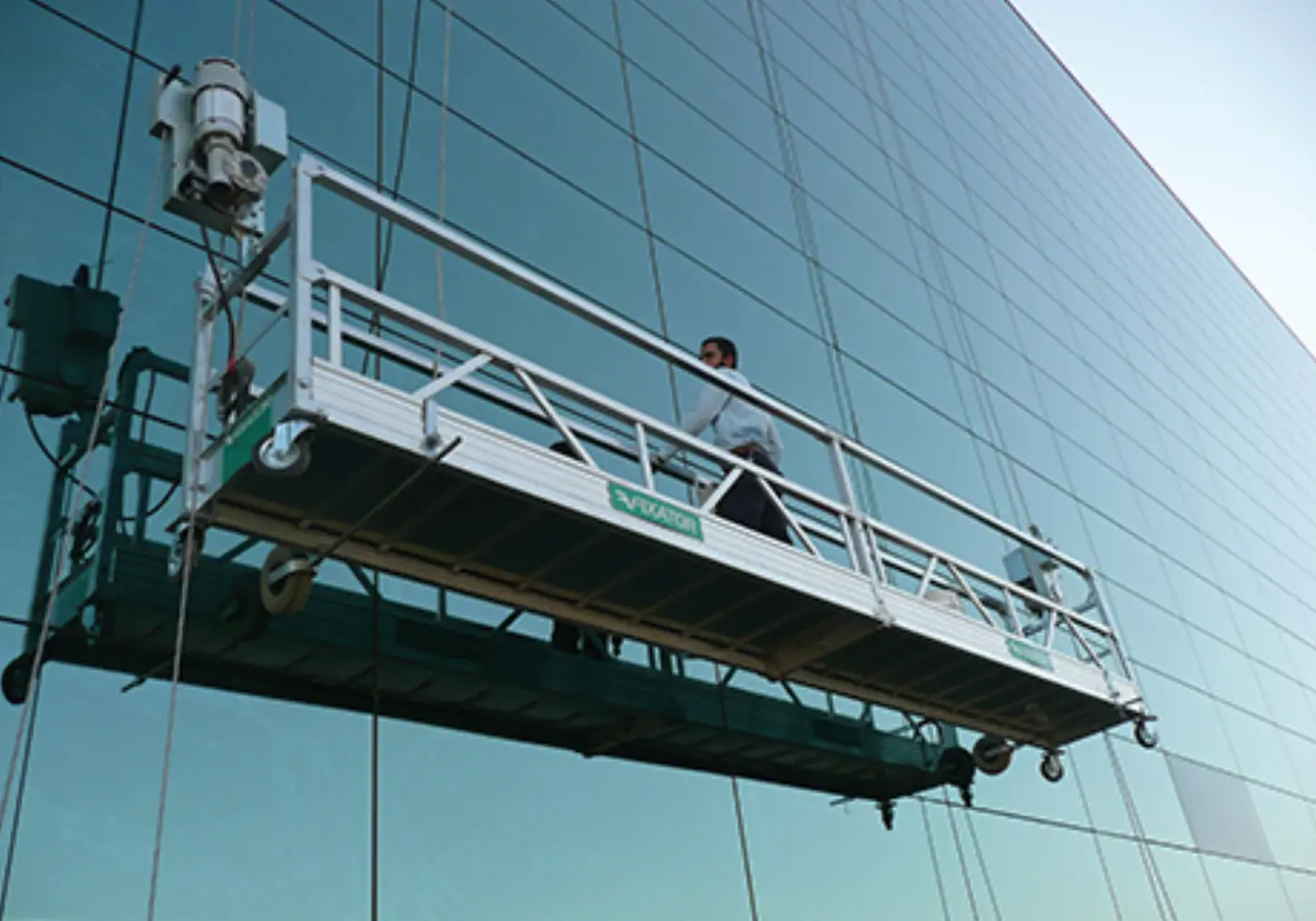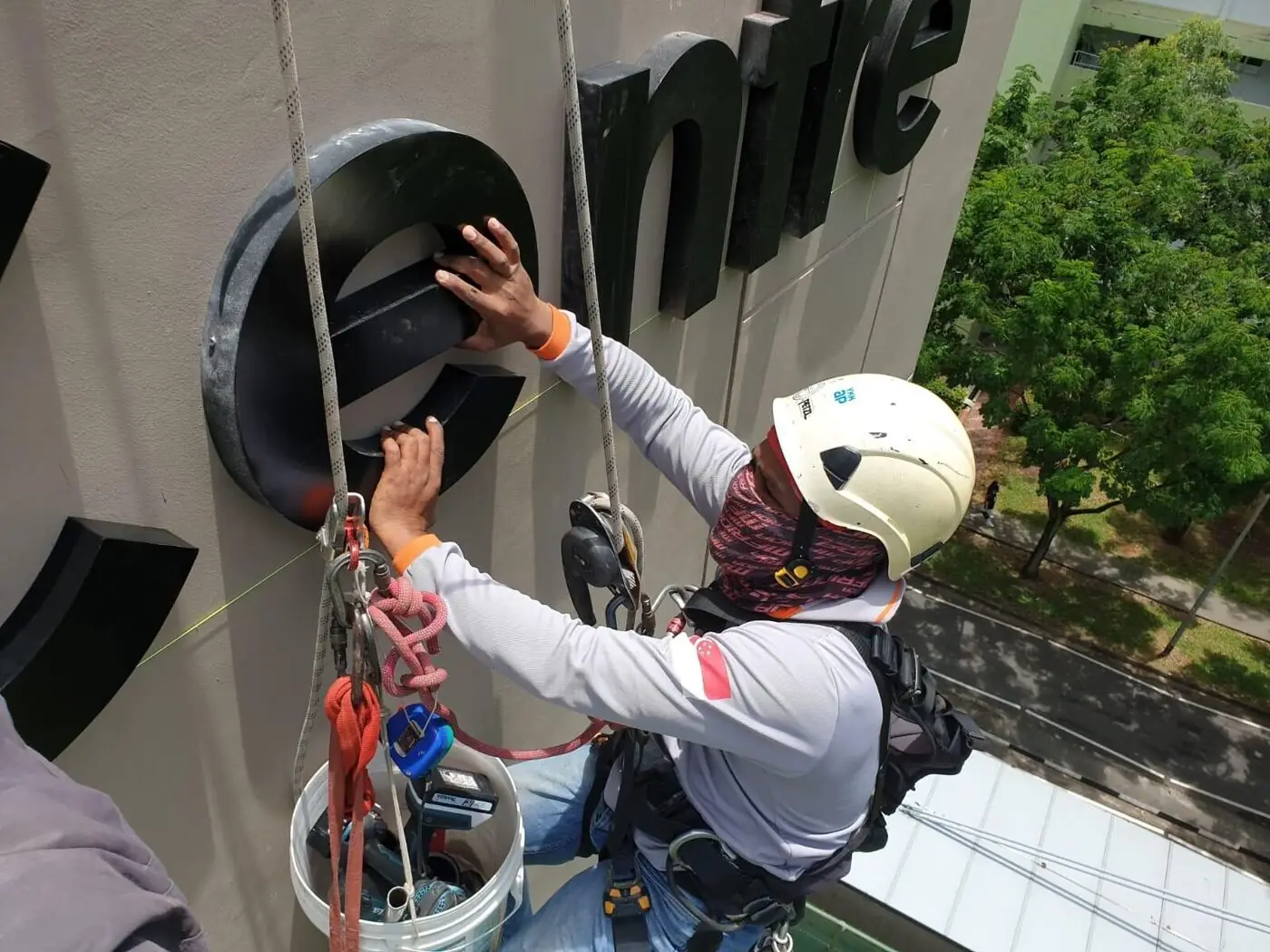
What constitutes a MEWP?
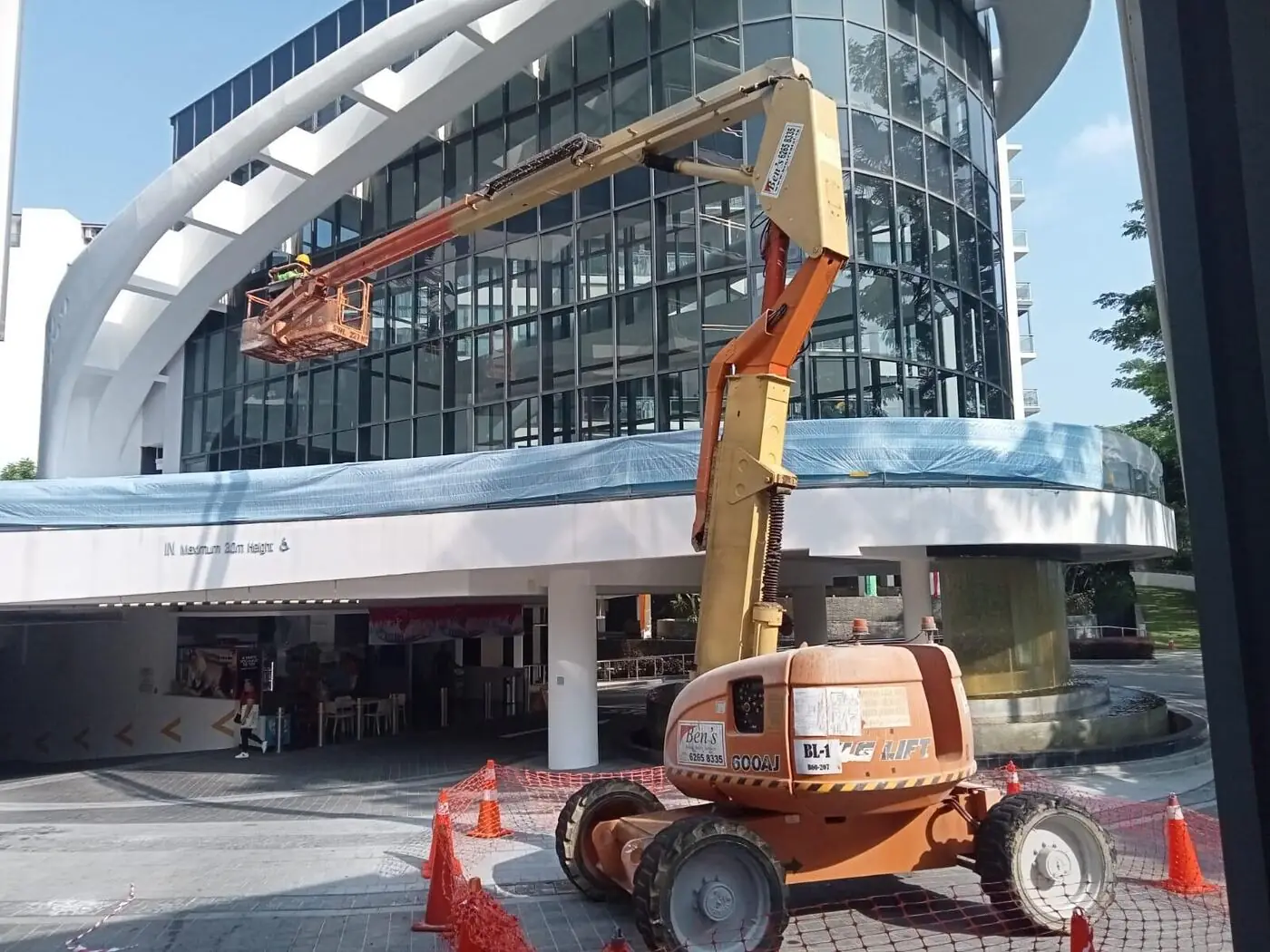
Under Singapore's regulatory framework, a MEWP is a mobile machine with an extendable work platform designed to raise personnel for work at height. Common types include:
- Boom lifts — articulated or telescopic boom arms providing both vertical and horizontal reach; suited for reaching over obstacles or facades at an angle.
- Scissor lifts — pantograph mechanism providing vertical-only lift; suited for tasks requiring a larger working platform directly below the point of work.
- Vertical personnel platforms (VPPs) — smaller, narrower units for single-operator use in confined or space-limited settings.
- Truck-mounted platforms — boom lift systems mounted on road vehicles; used on public roads and roadsides.
MEWPs are classified as lifting equipment under the WSH (General Provisions) Regulations and are subject to statutory thorough examination at intervals prescribed by regulation.
Stakeholder responsibilities
Owner of the MEWP
The owner is required to ensure the MEWP is thoroughly examined by an Authorised Examiner (AE) at the intervals prescribed under the WSH (General Provisions) Regulations. The examination record must be retained and made available for inspection.
Occupier / principal
The occupier of the workplace where the MEWP is used should ensure that current examination records are in place and that the area of MEWP operation is appropriately managed for ground conditions and overhead hazards.
Employer
Employers are responsible for ensuring that all persons operating MEWPs have been trained, familiarised and authorised for the specific machine type they are operating. Generic WAH training is not sufficient for MEWP operation.
Operator
The MEWP operator should hold relevant training for the machine type (boom lift, scissor lift or VPP), conduct a pre-use inspection before each shift, and not operate the machine if defects are found.
Pre-use inspection: what to check
Before each shift or each new deployment, the operator should — in accordance with the manufacturer's guidelines — inspect the MEWP. Key checks include:
- Controls and hydraulics — correct response at base and platform controls; hydraulic lines free of visible leaks.
- Safety devices — emergency lowering function, tilt alarm (if fitted), overload indicator.
- Structural condition — boom, platform, guardrails and toe boards free of visible damage or deformation.
- Ground contact points — tyres or tracks in serviceable condition; outrigger pads (if applicable) present and undamaged.
- Harness anchor points — dedicated anchor points within the platform present and undamaged.
If any defect is found, the machine should be isolated, tagged as defective and removed from service. It should not be operated until inspected and cleared by a competent person.
Site survey and machine selection
Ground conditions
Singapore construction and maintenance sites frequently involve soft fill, drainage channels, service covers, basement slabs and kerb-cut transitions. MEWPs are sensitive to ground bearing capacity — particularly outrigger-based models. Spreader plates may be required. The manufacturer's specifications for ground slope and bearing pressure should not be exceeded.
Overhead hazards
Overhead power lines, pipes, steel beams and cantilevered facade elements are primary entrapment and collision risks. The site survey should identify these and establish safe approach distances. Anti-entrapment devices are available but do not substitute for advance hazard identification.
Pedestrian and vehicle separation
The work zone around a MEWP should be cordoned off with appropriate barriers and clearly displayed warning signs before operation begins. Personnel below the work area are at risk from falling objects, even small hand tools.
Weather
MEWPs — particularly boom lifts with long horizontal reach — are sensitive to wind loading. Manufacturers specify maximum wind speeds for safe operation. Work should not proceed in rain that reduces visibility or in conditions associated with approaching thunderstorms.
During operation: key safety requirements
- Operators should anchor their harness to the designated anchor point inside the platform using a short lanyard — not to the guardrail.
- The MEWP should not be used as an access route to another level; workers should not exit the platform at height.
- The Safe Working Load (SWL) and maximum number of occupants, as marked on the machine, should not be exceeded at any time.
- Operate within the manufacturer's specified reach or outreach envelope — exceeding rated outreach is a primary cause of instability in boom lifts.
- Maintain clearance from overhead obstacles to mitigate the catapult-effect hazard when a boom releases from a trapped position.
- Workers should maintain firm footing on the platform floor at all times; standing on toe boards, mid-rails or guardrails is prohibited.
Maintenance and examination records
Beyond the statutory examination by an AE, MEWPs require routine maintenance in accordance with the manufacturer's service schedule. Maintenance records should be retained alongside examination certificates. Where a MEWP has been involved in a significant incident — collision, overturning or suspected overloading — it should be taken out of service and inspected before returning to use.
Permit-to-Work requirements
Under the WSH (Work at Heights) Regulations and MOM's Permit-to-Work guidance, a PTW system is required for hazardous work at height in workplaces to which the regulations apply. Even where a formal PTW is not mandated, a documented pre-work safety briefing and sign-off should be conducted before MEWP operations begin each day.
Frequently asked questions
What operator training is required to operate a MEWP in Singapore?
MEWP operators must hold the relevant WAH training certification under the WSH framework. The required course depends on the MEWP type, so employers should verify current certificates before deployment.
How often does a MEWP need to be examined by an Authorised Examiner?
Thorough examination intervals are prescribed under the WSH framework and depend on the equipment category and usage profile. The examination certificate on the machine states the next due date.
Can a MEWP be used on soft landscaped ground?
Generally, no. Soft, unprepared ground cannot reliably carry MEWP wheel or outrigger loads under extended boom conditions. Any ground protection must be sized by a competent person using the machine load data.
Is a harness required if the MEWP has guardrails?
For boom-type MEWPs, occupants must wear a full-body harness anchored to the designated platform attachment point. For scissor lifts, the manufacturer requirements and site risk assessment determine the fall protection requirement.
What should a building manager check before allowing a contractor to deploy a MEWP on site?
Check the current AE examination certificate, operator WAH training, site-specific risk assessment, SWP with exclusion zone dimensions, and current public liability and work injury compensation insurance.