Why worker behaviour is part of risk management
Under the WSH (Risk Management) Regulations, every workplace must conduct risk assessments and implement risk control measures before new work commences. The Code of Practice on WSH Risk Management explains how this should be done. While the legal duty to set up and run the risk management system rests with the employer, the system only works when workers understand the controls and apply them consistently. Section 4.6 of the Code of Practice on WSH Risk Management states clearly that employees are to adhere to the measures stated in the RAs and to report any incident, accident, near miss, occupational disease, dangerous occurrence or suspicious risk to their immediate supervisor so that prompt action can be taken.
Understand the RA, FPP and SWP for the task
Before starting a high-level task, workers should know what is in the documents that describe how the work is to be done safely:
- The Risk Assessment (RA) — what hazards have been identified for the specific task and location, and what controls are in place for each.
- The Fall Prevention Plan (FPP) — the higher-level framework for working at height on the site, including roles, rescue and PPE.
- The Safe Work Procedure (SWP) — the step-by-step method that defines how the task should be performed safely.
Workers should ask the supervisor to walk through these before mobilisation. If the controls described do not match what the worker sees on site — anchor points missing, edge protection not yet installed, MEWP ground conditions different — that is a deviation that must be raised before the work begins.
Participate in toolbox briefings and pre-start checks
Toolbox briefings before each shift are a structured part of communication on Singapore WAH sites. They are not a formality. Workers should:
- Attend the briefing in full and sign the attendance record where one is in use.
- Confirm understanding of the day's task, the access method, the rescue plan and the stop-work triggers.
- Raise questions at the briefing rather than after the work has started.
- Review the pre-start equipment inspection — ladders, MEWP, gondola, ropes, anchors and PPE.
Communication is described in the Code of Practice on WSH Risk Management as a constant aspect throughout the RM process. Toolbox briefings are how that constant communication actually reaches the people doing the work.
Use PPE and fall protection correctly
PPE is the last layer of the hierarchy of controls, but it is the one workers handle directly. Practical points for fall protection:
- Inspect harnesses, lanyards, energy absorbers, helmets and eye protection at the start of each shift.
- Check that lanyards and devices are within their service date and have not been involved in a previous fall.
- Connect to the designated anchor points on the platform or structure — never to guardrails, suspension ropes or fittings of unknown rating.
- Make sure the lanyard length and energy absorber are matched to the available fall clearance below.
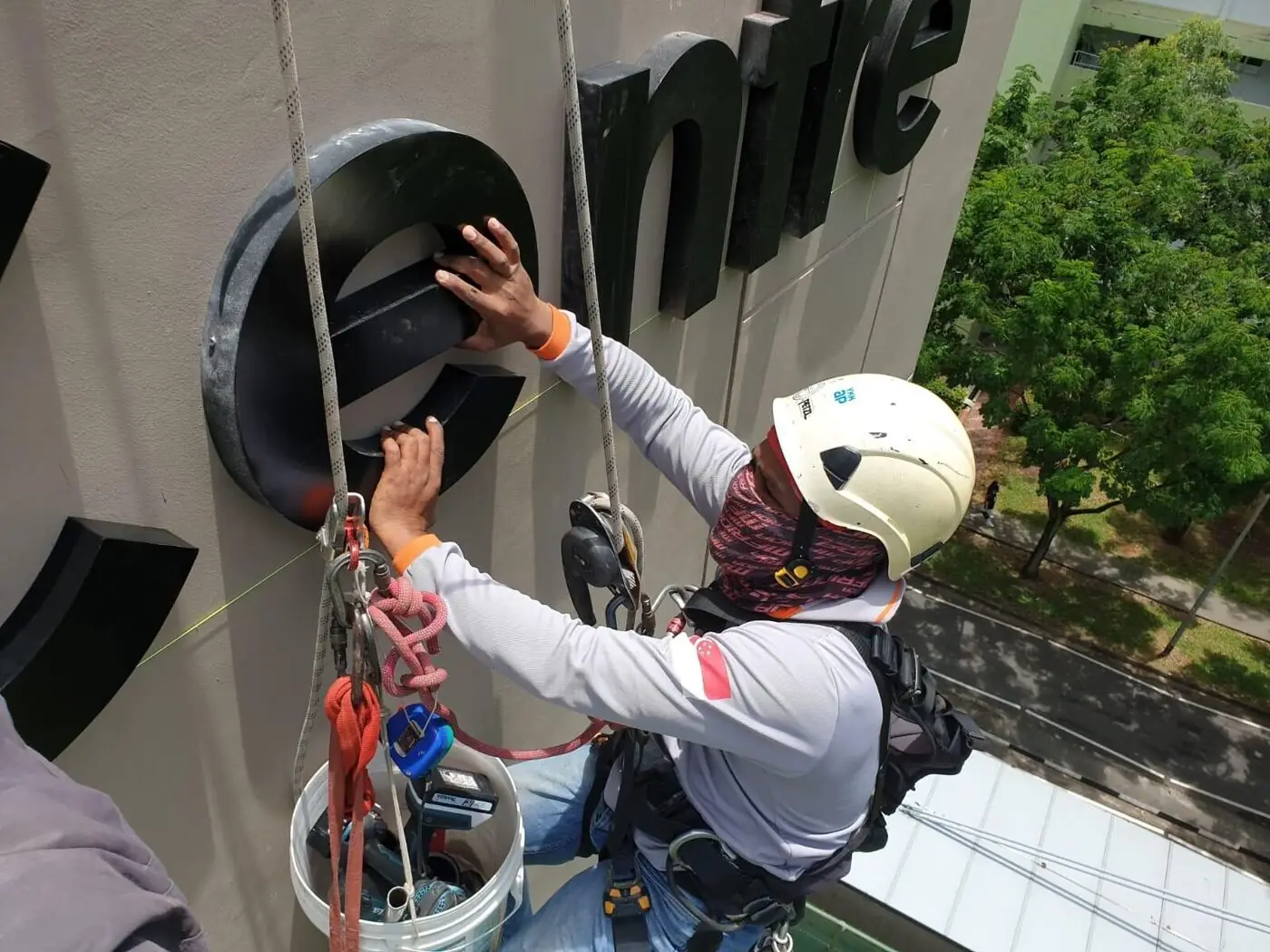
- Tools should be tethered or secured to prevent them from falling onto people working below.
If any item of PPE is damaged, contaminated or doubtful, report it immediately and replace it before continuing.
Report incidents, near misses and changing conditions
The Code of Practice on WSH Risk Management is explicit that workers should report incidents, accidents, near misses, occupational disease, dangerous occurrences and suspicious risks. In a work-at-height context, this includes:
- Falls or slips, even where no injury occurred.
- Dropped tools or materials, especially in or near pedestrian zones.
- Equipment that did not behave as expected — sticky controls, unusual rope wear, hoist noise, unstable outriggers.
- Anchorage that appears corroded, loose or undocumented.
- Site changes that were not in the RA — newly installed services, parked vehicles in the exclusion zone, unexpected work overhead or below.
- Suspicious behaviour or unauthorised access to the site, in line with broader workplace security expectations.
A near miss reported and acted on prevents the incident that follows. Reporting is not a complaint — it is part of the legal and procedural framework.
Stop and escalate when conditions change
A worker has both the right and the responsibility to stop the work if conditions change beyond what the RA assessed. Common stop-work triggers on Singapore WAH sites include:
- Wind speeds approaching the equipment manufacturer's rated limit for the gondola, MEWP or rope system in use.
- Heavy rain, lightning activity or a thunderstorm forecast for the working area.
- A change in adjacent activity — a crane swing path, a hot-works permit nearby, or vehicle movements through the exclusion zone.
- Equipment defect identified mid-shift.
- A worker showing signs of fatigue, dizziness, vertigo or medication impairment.
The supervisor should be informed and the work should not resume until conditions have been reassessed.
Stay within the limits of training and authorisation
Training records matter. Workers should:
- Hold the relevant WSQ Work-at-Heights training before being assigned to WAH tasks.
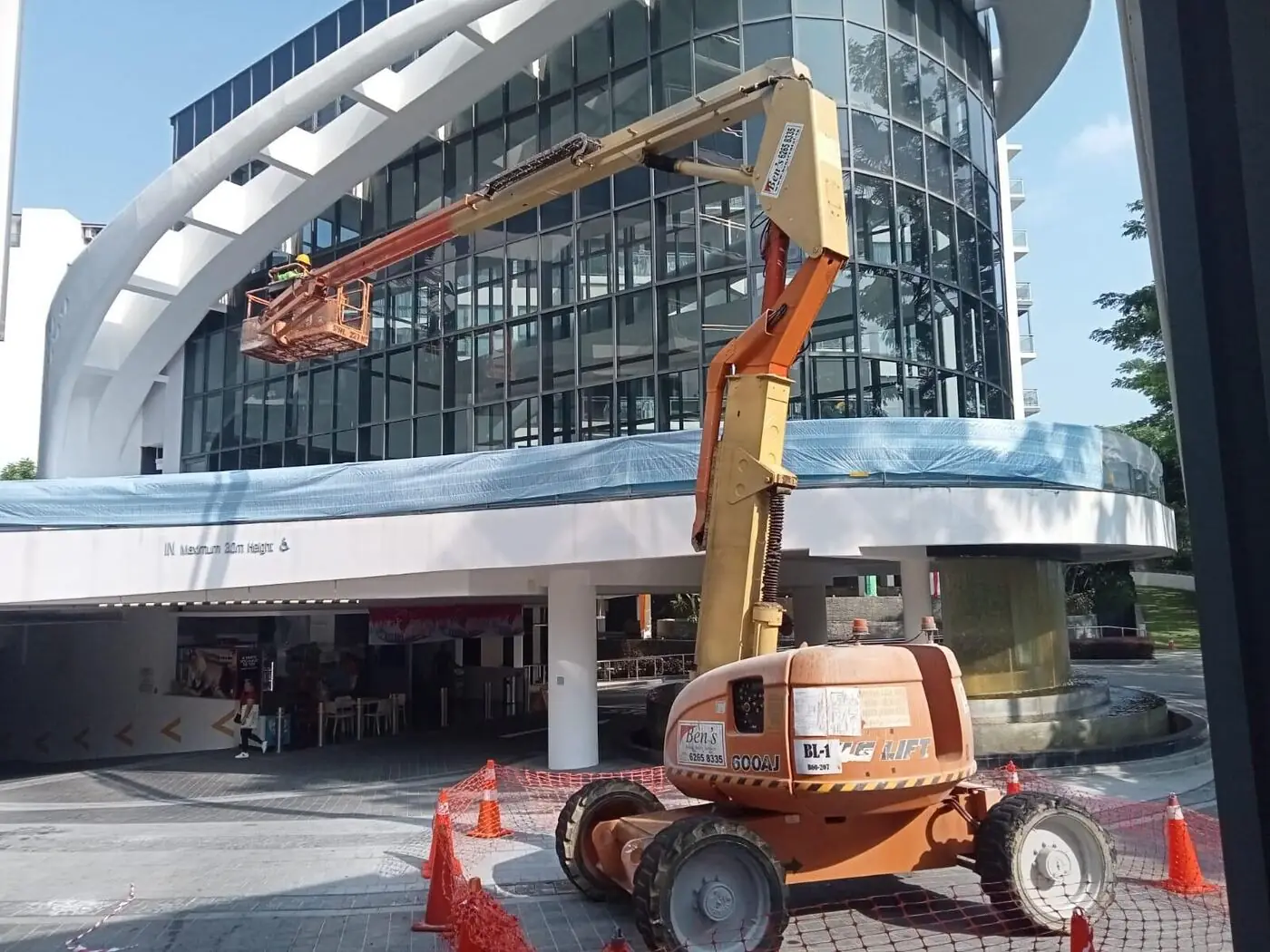
- Hold MEWP-specific training and authorisation before operating boom lifts, scissor lifts or vertical personnel platforms.
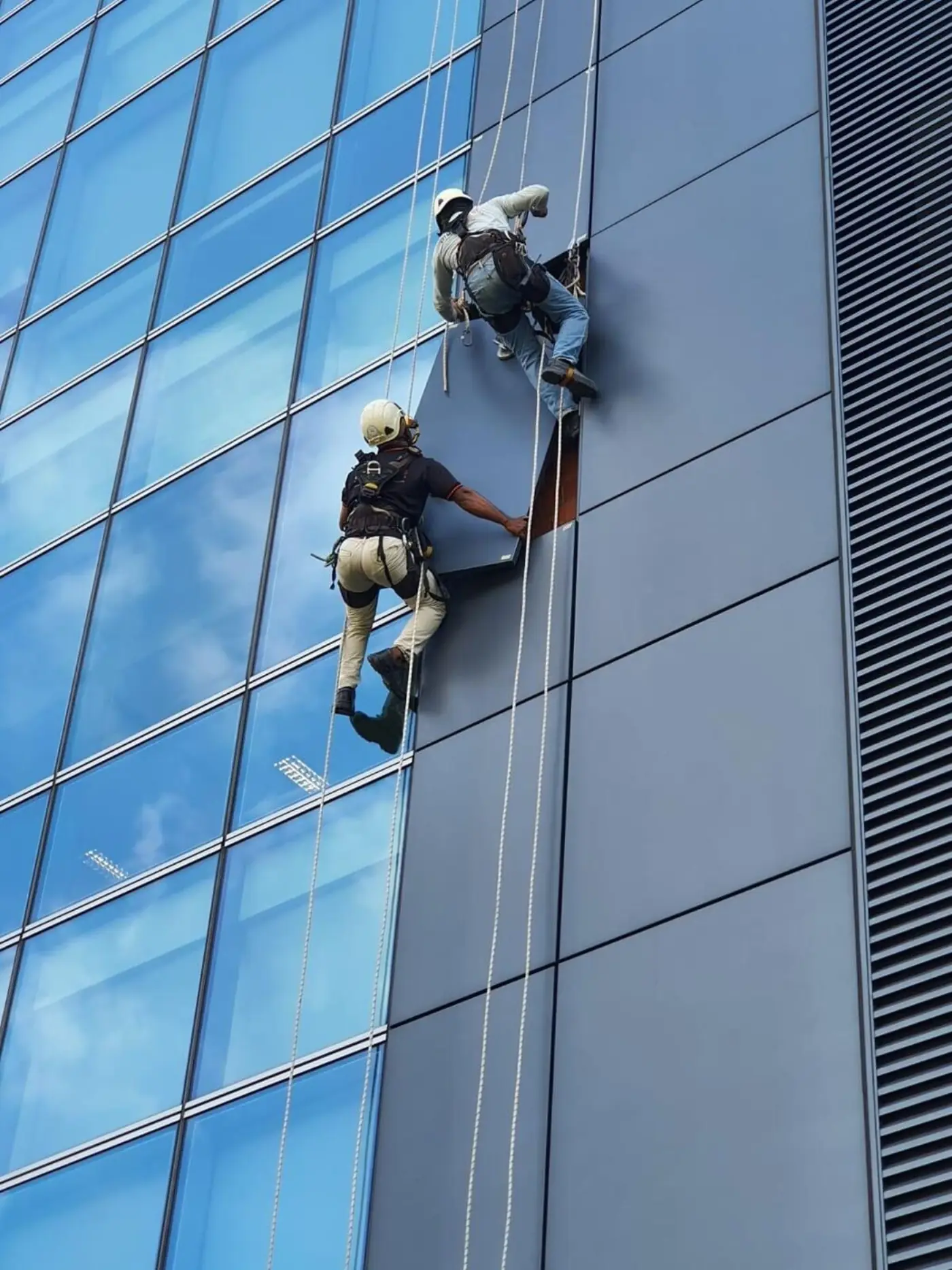
- Hold rope access training appropriate to the level at which they are working — and not exceed that level on site.
- Refresh training before it expires; carry copies of certificates where the site requires them.
Operating equipment without the relevant training is a breach of the SWP and the FPP, and exposes the worker and the people around them to additional risk.
Keep records that support the system
Workers contribute to the documentation that the WSH Risk Management framework relies on, including:
- Toolbox attendance and acknowledgement of pre-start briefings.
- PPE inspection logs and equipment defect tags.
- Permit-to-Work sign-on and sign-off where the site uses a PTW system.
- Reports of near misses, dangerous occurrences and equipment issues.
These records are part of the evidence that controls are working. They support the Risk Register that the Code of Practice on WSH Risk Management requires the workplace to maintain.
A short worker checklist before going up
- I have attended the toolbox briefing for today's task.
- I understand the access method, the SWP, the rescue plan and the stop-work triggers.
- My PPE is inspected and within its service date.
- I am anchoring to a designated anchor point with the correct lanyard configuration.
- My tools are secured and I am not carrying anything I do not need at height.
- I know who my supervisor is and how to call for rescue assistance.
- I have reported any concerns about the equipment, the site or my own condition before starting.
If any of these is unclear, raise it with the supervisor before mobilising — not after.
Frequently asked questions
Can a worker refuse to carry out WAH work if they believe it is unsafe?
Yes. A worker should inform the supervisor of the specific concern and follow the company's escalation procedure. If the issue is not resolved, they may contact MOM.
What WAH training do workers in Singapore need?
Workers performing specified WAH activities must complete the relevant WAH training. General WAH workers, supervisors, MEWP operators and rope access technicians have different accreditation pathways.
How often should WAH workers refresh their training?
Refresher intervals vary by course. Workers should check certification validity dates and supervisors should verify currency before deployment.
Who is responsible if a worker is injured because they did not follow the SWP?
Responsibility under Singapore's WSH framework is shared and graduated. The employer retains primary duty, while workers also have independent duties to follow stated controls.
Is a pre-use harness inspection legally required?
Fall protection equipment must be properly maintained and inspected. Pre-use inspection is the minimum practical standard before equipment is relied on to prevent a fatal fall.