Abstract
The permit-to-work system ("PTW") established under Part III of the Workplace Safety and Health (Work at Heights) Regulations 2013 functions as the principal procedural gatekeeper of hazardous work at height in Singapore. This paper examines the statutory triggers for PTW issuance, the four-role governance structure prescribed by the Regulations and operationalised through the Workplace Safety and Health Council's Approved Code of Practice, the sequential workflow set out in Regulations 22 through 28, and the most recent enforcement and advisory positions of the Ministry of Manpower and the Tripartite Alliance for Workplace Safety and Health. It concludes with a compliance audit framework intended for occupiers and principals discharging non-delegable duties under the Regulations.
1. Doctrinal Rationale
Where the Fall Prevention Plan ("FPP") establishes the planning instrument under Regulation 5, the PTW system established by Part III of the Workplace Safety and Health (Work at Heights) Regulations 2013 ("the WAH Regulations") performs a distinct juridical function: it is the final pre-task authorisation gate that, at the point of commencement, verifies whether the controls anticipated by the FPP have in fact been implemented at the workface. In doctrinal terms, the FPP discharges the planning-stage duty; the PTW discharges the verification-stage duty. The two instruments are complementary; neither, in isolation, is sufficient.
The empirical case for procedural rigour is supported by the regulator's enforcement record. The Ministry of Manpower's 2024 annual report documents an increase in the construction sector's fatal injury rate from 3.4 to 3.7 per 100,000 workers, with falls from height a principal contributor (Ministry of Manpower, *Singapore's WSH Performance in 2024*, 26 March 2025 (https://www.mom.gov.sg/newsroom/press-releases/2025/0326wshreport)). In the same year, the Ministry conducted in excess of 17,000 inspections, took enforcement action on more than 16,000 breaches of the Workplace Safety and Health Act and its subsidiary regulations, imposed 1,500 composition fines aggregating in excess of S$3.1 million, and issued fifty-eight Stop Work Orders (Ministry of Manpower, *Singapore's WSH Performance in 2024* (https://www.mom.gov.sg/newsroom/press-releases/2025/0326wshreport)). The Ministry conducted a further 3,000 inspections in the first half of 2025, with working safely at height expressly identified as an enforcement priority (Ministry of Manpower, *Singapore WSH Performance in 1H 2025*, 30 September 2025 (https://www.mom.gov.sg/newsroom/press-releases/2025/3009-singapore-wsh-performance-in-1h)).
2. Statutory Trigger: The Three-Metre Threshold
Regulation 21 of the WAH Regulations prohibits any person from undertaking hazardous work at height without a valid PTW. Regulation 2 defines "hazardous work at height" as work undertaken in or on an elevated workplace, an opening, an edge, a surface, or any other place — whether above or below ground — from which a person may fall a distance of more than three metres (Singapore Statutes Online, *WSH (WAH) Regulations 2013* (https://sso.agc.gov.sg/SL/WSHA2006-S223-2013)). The three-metre threshold is jurisdictional: below it, the PTW regulatory obligation does not attach, though the general fall-prevention duties continue to apply.
The Workplace Safety and Health (Work at Heights) (Amendment) Regulations 2014, which came into operation on 1 May 2014, materially refined the operative scope of Part III. Following the amendment, the PTW regulatory requirement applies only to workplaces meeting the definition of a Factory under the Workplace Safety and Health Act — in practical terms, construction worksites, shipyards, and manufacturing factories (Ministry of Manpower, *Factsheet on the WSH (WAH) (Amendment) Regulations 2014* (https://www.mom.gov.sg/-/media/mom/documents/safety-health/factsheet-on-wahamendmentregulations.pdf)). Workplaces falling outside the Factory definition remain subject to the FPP and general fall-prevention duties, but are not, as a matter of subsidiary legislation, required to operate a PTW system under Part III.
3. Exemptions: Mitigated Edge Conditions
The Ministry of Manpower's factsheet on the 2014 amendment identifies three scenarios in which, notwithstanding a fall risk in excess of three metres, the PTW is not required because the hazard has been mitigated by effective edge protection (Ministry of Manpower, *Factsheet on the WSH (WAH) (Amendment) Regulations 2014* (https://www.mom.gov.sg/-/media/mom/documents/safety-health/factsheet-on-wahamendmentregulations.pdf)):
- Work performed on a flat roof with a continuous perimeter parapet wall of not less than one metre in height and no openings or open sides through which a worker could fall;
- Work performed on a mezzanine with safe and adequate stair access and an effective perimeter barricade; and
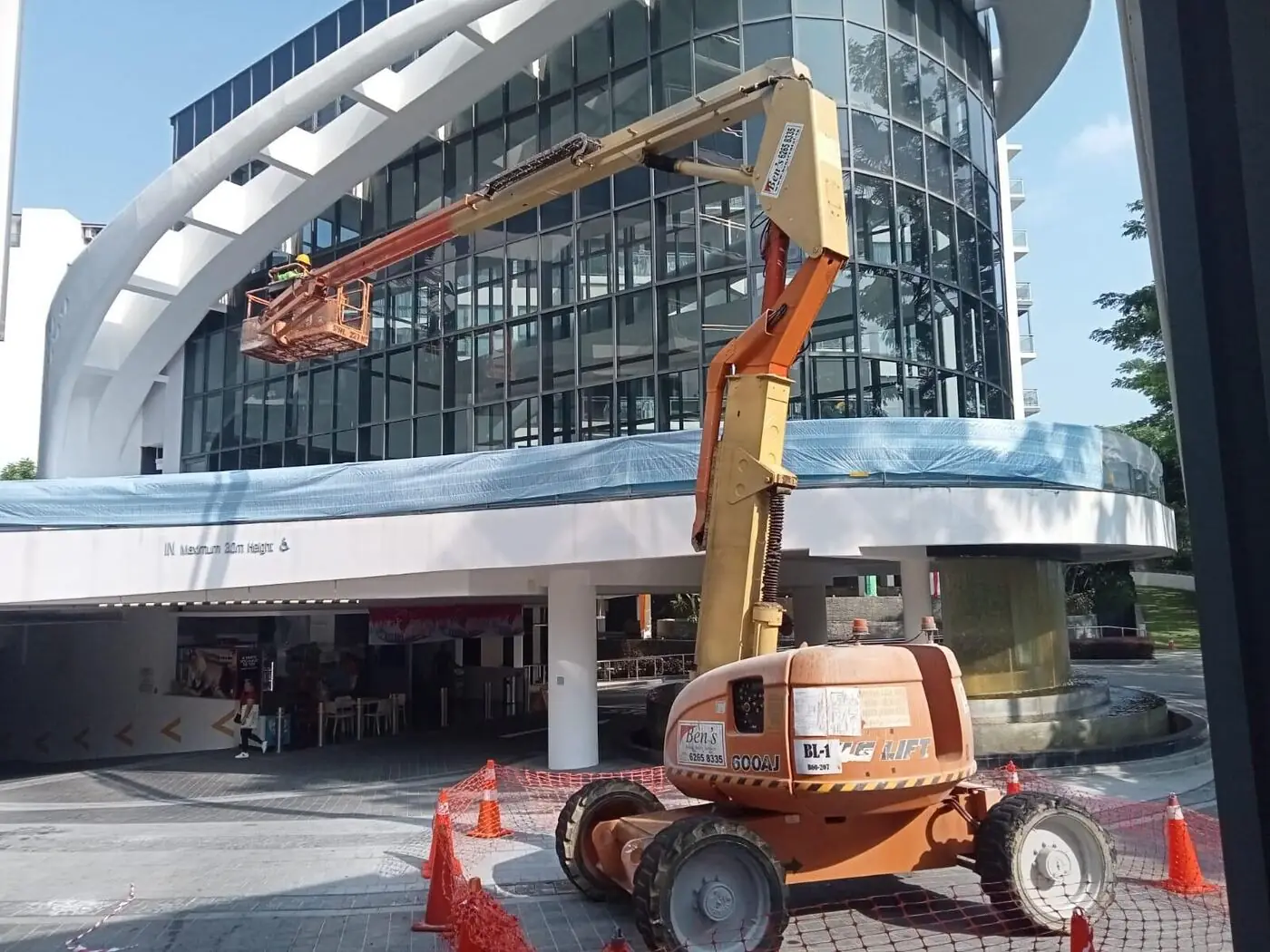
- Work performed within a properly barricaded mobile elevated work platform, with personal protective equipment anchored to designated anchor points at all times.
The exemption is, however, conditional and rebuttable: the responsible person retains discretion to implement a PTW where, in his judgement, the residual risk so requires. Conservative practice favours implementation in marginal cases.
4. The Four-Role Governance Structure
The Approved Code of Practice for Working Safely at Heights, read with the WAH Regulations, identifies four discrete roles within the PTW system (Workplace Safety and Health Council, *Code of Practice for Working Safely at Heights*, 2nd rev. 2013 (https://www.tal.sg/wshc/-/media/tal/wshc/resources/publications/codes-of-practice/files/wsh-code-of-practice-2013_ebook.ashx)):
| Role | Function | Statutory Source |
|---|---|---|
| Occupier | Bears overall, non-delegable statutory duty for the operation of the PTW system. | WSHA 2006; WAH Regulations, Reg. 20 |
| PTW Applicant | The supervisor of the workers undertaking the hazardous work at height. | WAH Regulations, Reg. 22 |
| WAH Safety Assessor | A competent person who undertakes a physical site assessment and endorses the permit. | WAH Regulations, Reg. 23 |
| Authorised Manager | Issues, suspends, or revokes the permit. | WAH Regulations, Reg. 24 |
The 2014 amendment removed the antecedent requirement that the WAH Safety Assessor and the Authorised Manager be separate persons. A single competent person may discharge both roles, provided he holds sufficient experience and training to do so. The amendment, however, preserved the requirement that the PTW Applicant must not concurrently act as the WAH Safety Assessor for the same permit, on the doctrinal ground that the on-site verification function must be independent of the requesting function (Ministry of Manpower, *Factsheet on the WSH (WAH) (Amendment) Regulations 2014* (https://www.mom.gov.sg/-/media/mom/documents/safety-health/factsheet-on-wahamendmentregulations.pdf)).
An occupier may, by contractual arrangement, delegate the operational performance of PTW functions to a third party — for example, by appointing contractor personnel as WAH Safety Assessor or Authorised Manager. The statutory duties imposed on the occupier are, however, not delegable. Liability remains with the occupier in respect of any failure of the PTW system as a whole (Ministry of Manpower, *Factsheet on the WSH (WAH) (Amendment) Regulations 2014* (https://www.mom.gov.sg/-/media/mom/documents/safety-health/factsheet-on-wahamendmentregulations.pdf)).
5. The PTW Workflow: Regulations 22–28
Regulations 22 through 28 prescribe a sequential procedural workflow (Singapore Statutes Online, *WSH (WAH) Regulations 2013* (https://sso.agc.gov.sg/SL/WSHA2006-S223-2013)):
- Regulation 22 — Application. The PTW Applicant submits a formal application.
- Regulation 23 — Evaluation. The WAH Safety Assessor undertakes a physical assessment of the worksite and endorses the application.
- Regulation 24 — Issuance. The Authorised Manager issues the permit.
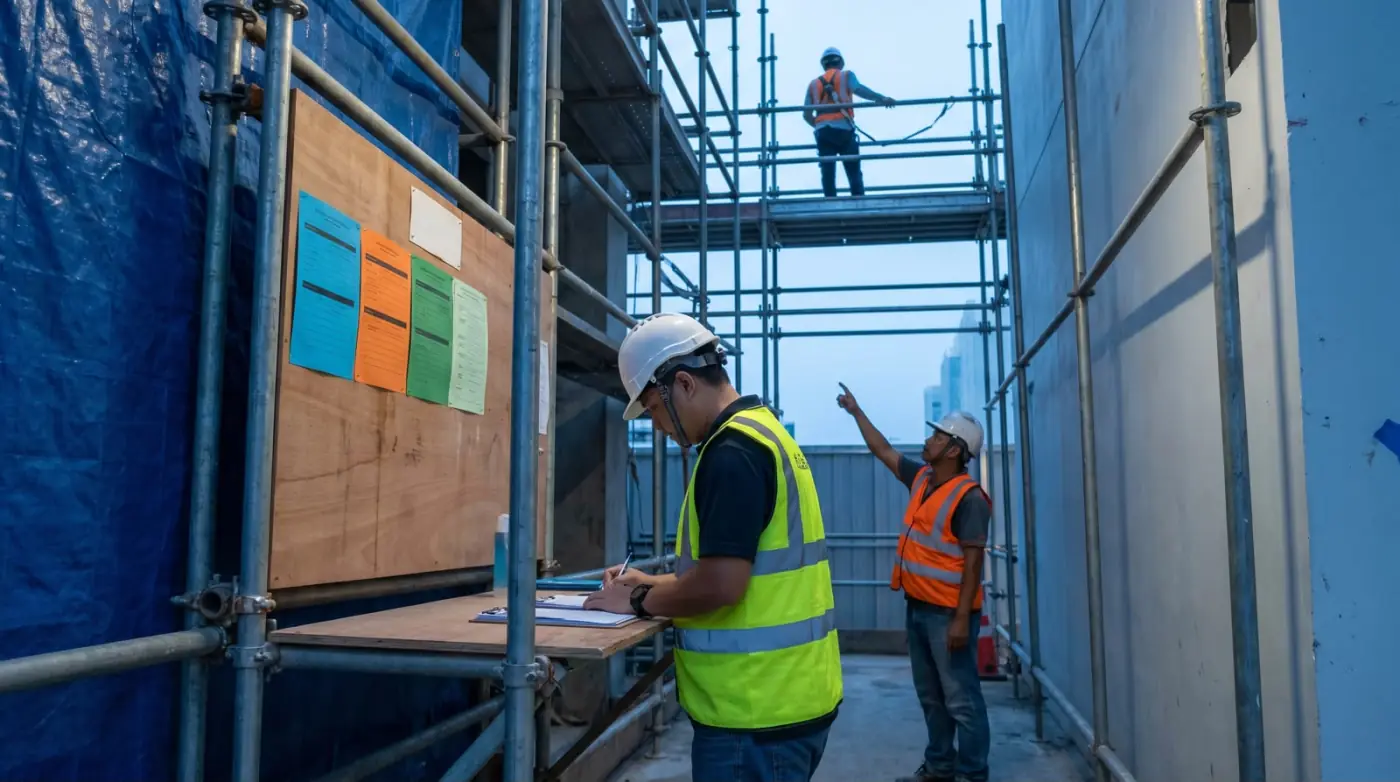
- Regulation 25 — Posting and Supervisory Duty. The issued permit is posted at the worksite and the named supervisor is present throughout the period of the work.
- Regulation 26 — Monitoring. Continuous on-site monitoring is maintained throughout the duration of the permitted work.
- Regulation 27 — Duty to Report Incompatible Work. Any incompatible activity in the vicinity must be reported and the permit suspended.
- Regulation 28 — Daily Review and Revocation. The permit is subject to daily review and is to be revoked upon any material change in conditions.
The Approved Code of Practice supplements the statutory workflow with two operational rules of considerable practical importance: the maximum duration of a PTW shall not exceed seven days; and daily review is mandatory throughout that period. A single PTW may extend across multiple work locations, but only where those locations share substantially similar fall-from-height hazards and identical, effective control measures (Ministry of Manpower, *Factsheet on the WSH (WAH) (Amendment) Regulations 2014* (https://www.mom.gov.sg/-/media/mom/documents/safety-health/factsheet-on-wahamendmentregulations.pdf), citing Clause 4.2 of the Approved Code of Practice).
6. Tripartite Alliance Guidance and 2026 Advisory Cycle
The Workplace Safety and Health Council's WSH Insights bulletin of 31 January 2024 articulates the operational expectation in unequivocal terms: a PTW is to be implemented for work-at-height activities where a worker could fall more than three metres, so that on-site verification confirms the effectiveness of the risk controls before the work is authorised to commence (Workplace Safety and Health Council, *WSH Insights, 31 January 2024* (https://www.tal.sg/wshc/-/media/tal/wshc/resources/newsletters/wsh-bulletins/files/20240131_wsh_insights.ashx)). The Tripartite Alliance's *Guide to WSH Obligations for Shipmasters and Contractors (Anchorage Works)* further specifies that endorsement by the WAH Safety Assessor must follow, not precede, the physical assessment and inspection of the work to be undertaken (Tripartite Alliance for Workplace Safety and Health, *Guide to WSH Obligations for Shipmasters and Contractors (Anchorage Works)* (https://www.tal.sg/wshc/-/media/TAL/Wshc/Resources/Publications/Guides-and-Handbooks/Files/Guide_WSHobligations_Shipmasters_Contractors_AnchorageWorks.pdf)).
The Council's 2026 publication cycle has materially reinforced the prevailing standard:
- The WSH Advisory of 25 March 2026, *Fall from Height Workplace Fatal Injuries in 2H 2025*, exhorts employers to verify the active enforcement of the PTW at the workface, not merely its issuance on paper (Workplace Safety and Health Council, *About Work at Heights* (https://www.tal.sg/wshc/topics/work-at-height/about-work-at-heights)).
- WSH Insights of 24 February 2026, *Working Safely with Mobile Elevating Work Platforms*, addresses the recurring boundary question between "PTW required" and "PTW exempt" in mobile elevated work platform operations, and emphasises that the parapet-and-barricade exemption requires evidentiary substantiation, not assumption (Workplace Safety and Health Council, *Work at Height* (https://www.tal.sg/wshc/topics/work-at-height)).
- WSH Insights of 10 March 2026, *Working Safely with Ladders*, identifies the most empirically common "low-drama" fall scenario that has, historically, escaped systematic PTW consideration (Workplace Safety and Health Council, *Work at Height* (https://www.tal.sg/wshc/topics/work-at-height)).
- The WSH Bulletin of 20 February 2026, *Industry Urged to Take Measures to Protect Workers' Safety and Health*, addresses the leadership accountability of occupiers — the same officers upon whom the non-delegable duty under Regulation 20 falls (Workplace Safety and Health Council, *Work at Height* (https://www.tal.sg/wshc/topics/work-at-height)).
The Council's 5 February 2026 presentation, *2025 Statistical Trends and Regulatory Insights in WAH*, encapsulates the prevailing forensic finding: at most fatal worksites, the deficiency identified by investigators is not the absence of a permit form, but the absence of substantive compliance with the procedural requirements that the form is intended to evidence.
7. Compliance Audit Framework
The following framework is recommended for occupiers and principals undertaking internal PTW audits:
- Does the workplace satisfy the definition of a Factory under the Workplace Safety and Health Act, and is the prevailing fall distance in excess of three metres?
- Has the WAH Safety Assessor undertaken a physical inspection of the worksite prior to endorsement?
- Is the issued PTW posted at the worksite, with the named supervisor present?
- Has the daily review under Regulation 28 been completed?
- Has any incompatible activity in the vicinity been identified, and is the Authorised Manager empowered and present to suspend the permit?
- Where the permit covers multiple locations, are the fall-from-height hazards and control measures substantially identical across those locations?
8. Conclusion
The PTW system established by Part III of the WAH Regulations 2013 functions as the final procedural verification of the planning-stage measures recorded in the FPP. Its operational integrity depends not upon the issuance of a permit form, but upon the substantive performance of the procedural duties prescribed by Regulations 22 through 28. The trajectory of enforcement activity by the Ministry of Manpower, and of advisory guidance issued by the Tripartite Alliance and the Workplace Safety and Health Council through 2024–2026, indicates that procedural rigour, evidentiary substantiation of exemptions, and active workface enforcement will continue to be the principal focal points of regulatory scrutiny.
---
Primary Sources
- Workplace Safety and Health (Work at Heights) Regulations 2013, Part III — Singapore Statutes Online (https://sso.agc.gov.sg/SL/WSHA2006-S223-2013)
- WSH Council Approved Code of Practice for Working Safely at Heights (2nd rev. 2013) (https://www.tal.sg/wshc/-/media/tal/wshc/resources/publications/codes-of-practice/files/wsh-code-of-practice-2013_ebook.ashx)
- MOM *Factsheet on the WSH (WAH) (Amendment) Regulations 2014* (https://www.mom.gov.sg/-/media/mom/documents/safety-health/factsheet-on-wahamendmentregulations.pdf)
- WSH Council *WSH Insights, 31 January 2024* (https://www.tal.sg/wshc/-/media/tal/wshc/resources/newsletters/wsh-bulletins/files/20240131_wsh_insights.ashx)
- WSH Council — *About Work at Heights* (https://www.tal.sg/wshc/topics/work-at-height/about-work-at-heights)
- WSH Council — Work at Height resources, 2026 (https://www.tal.sg/wshc/topics/work-at-height)
- MOM *Singapore's WSH Performance in 2024*, 26 March 2025 (https://www.mom.gov.sg/newsroom/press-releases/2025/0326wshreport)
- MOM *Singapore WSH Performance in 1H 2025*, 30 September 2025 (https://www.mom.gov.sg/newsroom/press-releases/2025/3009-singapore-wsh-performance-in-1h)
- Tripartite Alliance for WSH, *Guide to WSH Obligations for Shipmasters and Contractors (Anchorage Works)* (https://www.tal.sg/wshc/-/media/TAL/Wshc/Resources/Publications/Guides-and-Handbooks/Files/Guide_WSHobligations_Shipmasters_Contractors_AnchorageWorks.pdf)